
Daniel Hart · ·
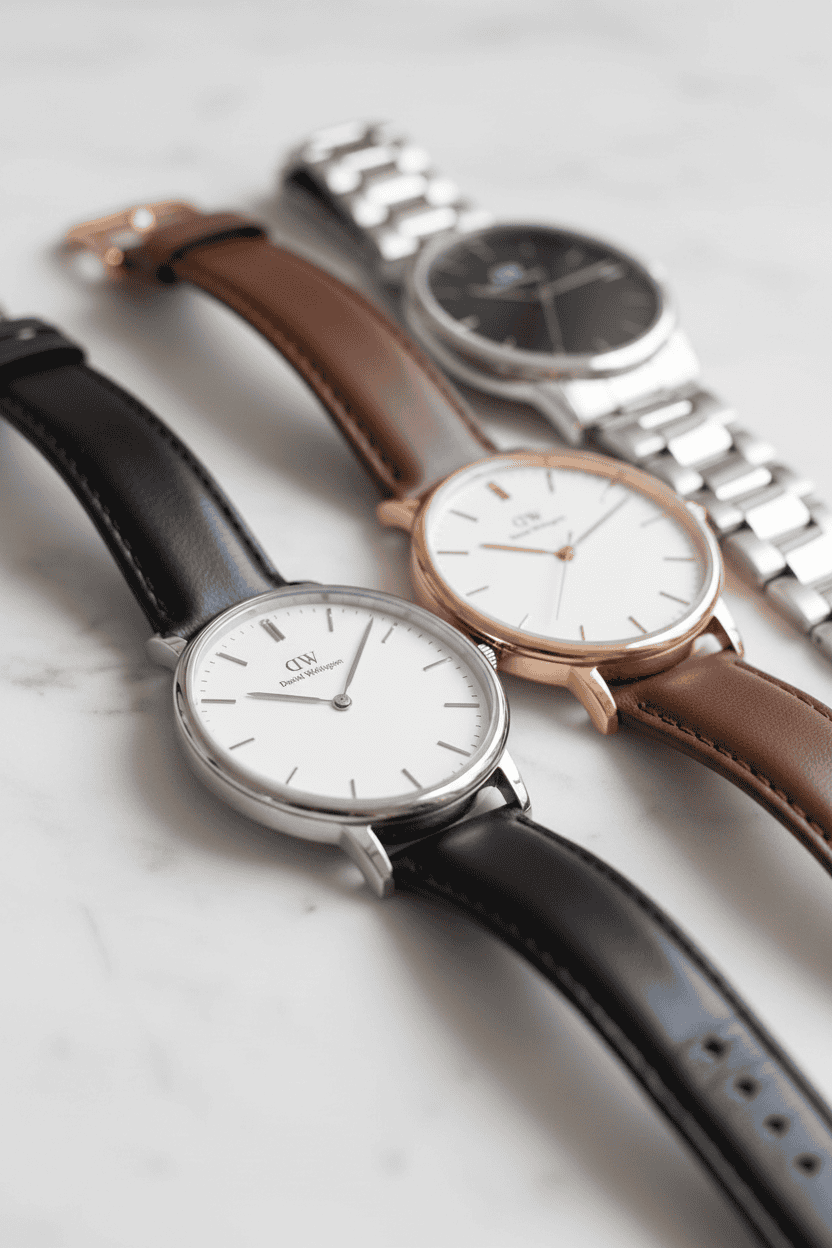
Daniel Wellington is the rarest thing in this category: a fashion watch brand with no watch company behind it. There is no Fossil, no Timex, no Movado in the background.
It was founded in Sweden in 2011 by Filip Tysander, and it grew by putting thin white-dialled watches on tens of thousands of Instagram accounts before anyone had heard of it. The marketing was the product innovation, and it worked.
The question that follows is whether the watches justify the prices that reputation now supports.
The short answer
Who actually makes a Daniel Wellington
Nobody famous. The company designs in Sweden and manufactures through contract suppliers in Asia, which is ordinary for the price and not a criticism in itself.
What it does mean is that there is no parent watchmaker underwriting the engineering. Fossil-built brands at least share a movement supplier and a case-making playbook with dozens of other labels, and our guide to Skagen shows what that scale buys at the cheap end.
The movements are Japanese quartz, which is the right choice and entirely reliable. The cases are 316L stainless steel, and the gold-tone models use a double plating that wears better than single-layer finishes. Those are real specifications, and they are the ones worth knowing.
The specification that decides everything
Every model in the range is rated 3 ATM. The company spells out what that permits in its own owner’s guide: rain and splashes are fine, and the watch should come off before showering, bathing or swimming.
This is the weakest water resistance of any brand in the fashion tier, and it sits at the highest prices. For comparison inside this same category, Guess rates its entry models at 100 m and Michael Kors reaches 10 ATM on its chronographs, both for less money.
The reason is thinness. A 6 mm case with a slim caseback cannot carry the same gasket stack as a 12 mm chronograph, and Daniel Wellington chose profile over sealing. That is a defensible design decision, but it is a decision the buyer should make knowingly. Our water resistance checker spells out what 3 ATM actually permits.
| Model | Case | Movement | Water resistance | Band | Price |
|---|---|---|---|---|---|
| Classic Sheffield | 40 mm steel | Japanese quartz | 3 ATM / 30 m | 20 mm leather | About $190 |
| Petite Durham | 28 mm steel, rose gold double plated | Japanese quartz | 3 ATM / 30 m | Leather | About $179 |
| Iconic Link | 36 mm steel | Japanese quartz | 3 ATM / 30 m | Steel bracelet | About $279 |

What the strap system is really for
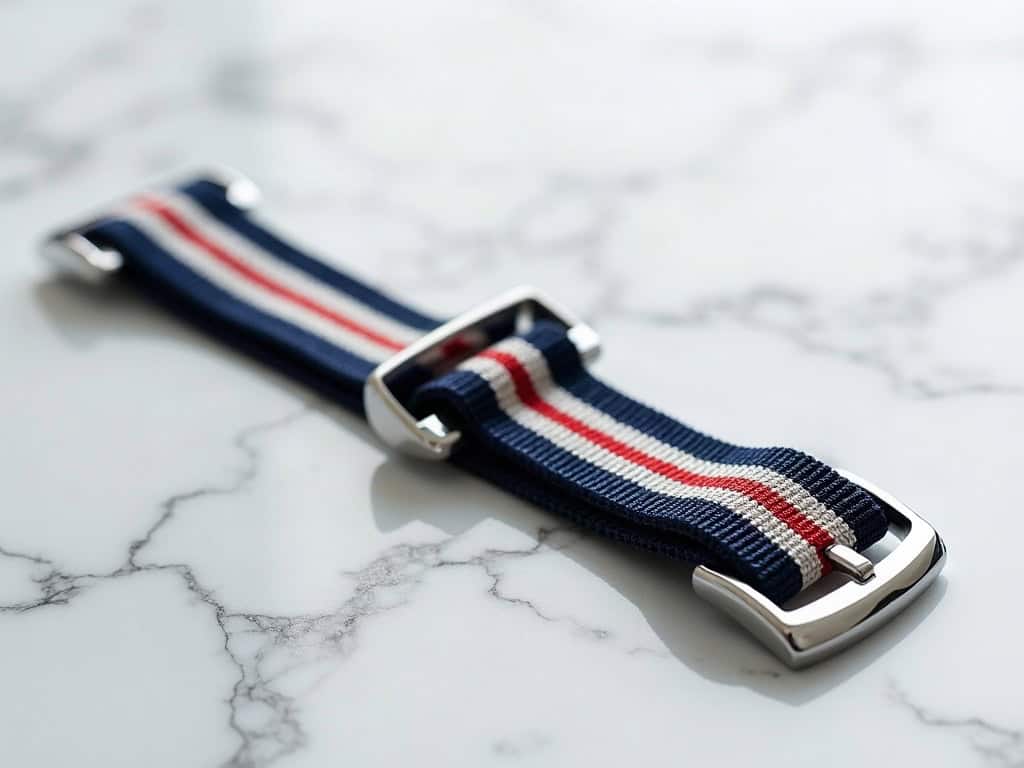
The interchangeable strap is the cleverest part of the business. Quick-release bars let a buyer swap leather for a striped NATO in seconds, and the brand sells the straps at a healthy margin.
It is genuinely useful. One watch with three straps covers more situations than three cheap watches, and the swap takes about ten seconds with no tools. Our strap width finder confirms sizing if you want to shop outside the brand, which is usually cheaper.
The catch is that the same system encourages a purchase pattern where the accessories cost as much as the watch. That is the model working as designed, and it is worth recognising before the third strap.
Who Daniel Wellington is for
Buy one if you want a thin, pale, unfussy watch that disappears under a cuff and matches everything. On that specific brief the brand is very good, and the proportions on the Petite line are better judged than most of the category.
It also suits someone who wants one watch and several looks. The strap system delivers on that promise properly.
Skip it if the watch will get wet, if you want it to survive being knocked about, or if specification is how you judge value. At $279 for the Iconic Link you are within reach of Swiss quartz with sapphire crystal, or a mechanical Japanese watch, and our Tissot versus Seiko comparison covers that route. For the same minimal look with better sealing and a lower price, Timex is the sensible alternative.
Three Daniel Wellington watches worth knowing
Chosen to show the range and the price ladder rather than as a ranking.


As an Amazon Associate, Watch The Watch earns from qualifying purchases at no extra cost to you. See our affiliate disclosure.
Frequently asked questions
Are Daniel Wellington watches good quality?
The build is decent for a fashion watch: 316L steel cases, reliable Japanese quartz and double plating on the gold-tone models. The weak point is water resistance, which is 3 ATM across the range.
Who makes Daniel Wellington watches?
The company itself, founded in Sweden in 2011, using contract manufacturers in Asia. Unlike most fashion watch brands it is not licensed to a large watch group such as Fossil, Timex or Movado.
Can you shower or swim with a Daniel Wellington?
No. Every model is rated 3 ATM, which covers rain and hand washing only. Hot water is worse than cold because heat expands the gaskets, so showering is specifically a bad idea.
Why are Daniel Wellington watches so expensive?
Marketing spend and brand positioning rather than components. The movements are standard Japanese quartz and the crystal is mineral, both of which appear in watches at a third of the price.
Are the straps interchangeable?
Yes, and it is the best feature of the range. Quick-release spring bars let you swap leather for nylon in seconds without tools, and third-party straps in the same width fit fine.
The verdict
Daniel Wellington sells a photograph, and it sells it extremely well. The watches are clean, thin and better proportioned than most of the category.
Just treat the 3 ATM rating as a hard limit rather than a formality. Bought as a dry-wear accessory with a couple of straps, it does its job. Bought as a watch to live in, it will disappoint sooner than the price suggests.

Daniel Hart is the editor of Watch The Watch. He researches and writes the site’s buying guides, brand comparisons, and explainers, focused on accessible, enthusiast-level watches — affordable automatics, divers, field and dress watches, everyday quartz, and the straps, winders and tools that go with them. The goal is practical, budget-aware advice that helps readers choose the right watch for their wrist and their budget. Recommendations draw on manufacturer specifications and the wider enthusiast community.
