
Daniel Hart · ·
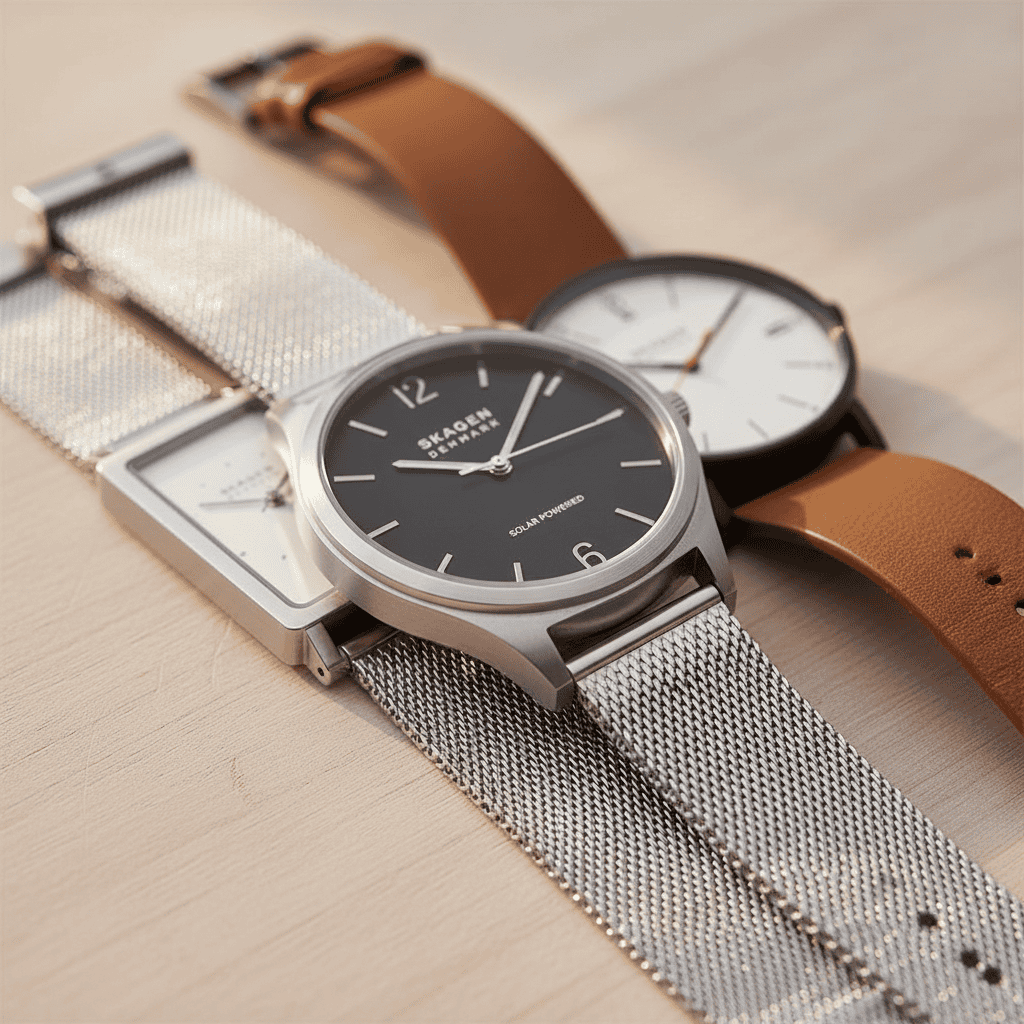
Skagen sits in an odd spot. It looks like a Danish design house, it is named after a fishing town on the northern tip of Jutland, and it is owned outright by a company in Dallas, Texas.
That ownership is the most useful fact about the brand, because it is the reason a Skagen costs roughly half what its corporate siblings do while coming out of the same supply chain.
Here is what you actually get, where the money goes, and who should buy one.
The short answer
Who actually owns Skagen
Skagen was founded in 1989 by Henrik and Charlotte Jorst, who sold Danish minimalism to an American market. Fossil Group bought the brand in 2012 and has run it ever since.
The distinction that matters is on Fossil’s own brands page, which splits its portfolio in two. Emporio Armani, Diesel, DKNY and Michael Kors are listed as licensed. Skagen is listed as owned, alongside Fossil itself and Zodiac.
A licence has to be paid for, and that cost lands in the retail price. Skagen carries no such fee, which is the plainest explanation for why a Signatur costs about $78 while a comparable Kors asks $135 and up for the same movement class and the same mineral crystal.
What the money buys
Skagen runs quartz across almost the whole range, and the Grenen line adds a solar-powered movement that charges from any light and removes battery changes entirely. Solar is the one genuine technical upgrade in the lineup, and it appears at around $200 rather than as a flagship-only feature.
Crystal is mineral throughout, the same compromise every fashion-tier brand makes. It resists scratches far less well than sapphire, and on a slim dress watch that lives against a desk edge you will see it in a year.
Water resistance runs lower than the fashion competition, and buyers should read it carefully. The Signatur is rated 5 ATM, while the Grenen Solar and the rectangular Hagen are 3 ATM, which means splashes only. Our water resistance checker turns those ratings into plain yes or no answers.
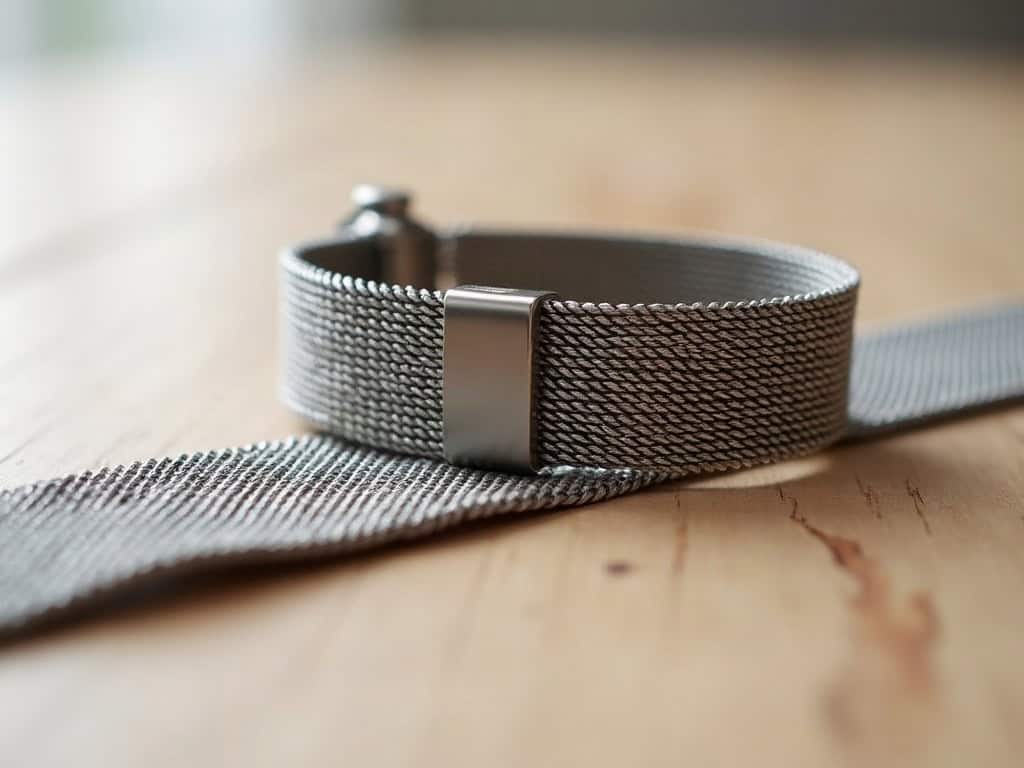
The mesh bracelet is the brand signature and the most divisive component. It is comfortable and light, it collects skin oil, and it cannot be resized with a link pin like a conventional bracelet. Band widths run 20 mm and 22 mm on the round models, so our strap width finder will confirm a replacement before you order one.
| Model | Case | Crystal | Movement | Water resistance | Price |
|---|---|---|---|---|---|
| Signatur Three-Hand | 40 mm steel | Mineral | Quartz, 3-hand | 5 ATM / 50 m | About $78 |
| Grenen Solar | 37 mm steel, mesh band | Mineral | Solar-powered | 3 ATM / 30 m | About $202 |
| Hagen Rectangular | 43 x 22 mm steel | Mineral | Quartz, 3-hand | 3 ATM / 30 m | About $120 |

Where Skagen beats its own siblings
Put the three Fossil-built brands side by side and the case makes itself. A Skagen Signatur and a Michael Kors Slim Runway are the same idea executed by the same company, and the Kors asks roughly seventy percent more for the licence on the dial.
The designs are also more disciplined. Skagen keeps cases thin, dials uncluttered and lume minimal, which is a coherent point of view rather than a compromise. Where Diesel sells size and Kors sells shine, Skagen sells restraint, and restraint ages better.
The honest limit is that none of this is watchmaking. If you want a movement worth servicing, the money goes further elsewhere, and our Tissot versus Seiko comparison covers that decision. For a fashion-tier quartz watch chosen on looks, Skagen is the one we would pick from this group.
Who Skagen is for
Buy one if you want a thin, quiet, well-proportioned watch that slips under a shirt cuff and does not announce itself. Skagen is the anti-statement watch in a category built on statements, and at these prices it is easy to own two.
Take the Grenen Solar seriously if you dislike battery changes. Solar at around $200 is unusual at this tier and removes the one recurring chore a quartz watch imposes.
Skip it if you need real water resistance, a bracelet you can resize at home, or a crystal that survives a decade of desk diving. For a first mechanical watch instead, Seiko is the more useful place to start.
Three Skagen watches worth knowing
Picked for spread across the range rather than as a ranking, and priced where the brand argument actually holds.


As an Amazon Associate, Watch The Watch earns from qualifying purchases at no extra cost to you. See our affiliate disclosure.
Frequently asked questions
Is Skagen a good watch brand?
Yes, within the fashion tier. The movements are ordinary quartz and the crystal is mineral, but the designs are disciplined and the pricing is the most honest in the Fossil Group range.
Is Skagen owned by Fossil?
Yes. Fossil Group acquired Skagen in 2012 and lists it as an owned brand rather than a licensed one, in the same group as Fossil, Zodiac, Michele and Relic.
Are Skagen watches actually Danish?
The design language is Danish and the brand was founded by Danish-born founders, but the company is American-owned and the watches are manufactured through Fossil’s supply chain in Asia.
Can you swim with a Skagen watch?
Usually not. Most of the range is rated 3 ATM, which covers splashes and hand washing only. A 5 ATM model like the Signatur handles shallow swimming, so check the individual reference.
Is Skagen better value than Michael Kors?
On paper, clearly. Both come from Fossil Group with comparable quartz movements and mineral crystal, but Skagen carries no licence fee and its entry models cost roughly half as much.
The verdict
Skagen is the quiet value pick of the Fossil stable. Same factory, fewer logos, lower price, better restraint.
Go in knowing the limits: mineral crystal, modest water resistance, and a mesh bracelet you cannot shorten with a pin. Within those limits it is the fashion watch we would actually own.

Daniel Hart is the editor of Watch The Watch. He researches and writes the site’s buying guides, brand comparisons, and explainers, focused on accessible, enthusiast-level watches — affordable automatics, divers, field and dress watches, everyday quartz, and the straps, winders and tools that go with them. The goal is practical, budget-aware advice that helps readers choose the right watch for their wrist and their budget. Recommendations draw on manufacturer specifications and the wider enthusiast community.
