Daniel Hart · ·
Pick up a titanium watch after a steel one and the difference is immediate and slightly disconcerting. It feels like a model rather than the real thing.
Titanium is roughly 40 percent lighter than stainless steel, and that single property drives every argument for and against it.
It is also softer, harder to finish, more expensive to machine and kinder to sensitive skin. Here is when it is worth the premium.
The short answer
The weight difference, and where it comes from
This is physics rather than marketing. Titanium has a density of about 4.5 grams per cubic centimetre according to the Royal Society of Chemistry, while the stainless steel used in watch cases sits near 7.9.
For an identical case, that makes the titanium version around 40 percent lighter, and on a large watch the difference is dramatic rather than subtle.
Whether that is good depends on you. Some people find a light watch disappears comfortably on the wrist; others find it feels insubstantial and cheap. There is no correct answer, and it is worth handling both before spending the premium.
| Titanium | Stainless steel | |
|---|---|---|
| Density | About 4.5 g/cm3 | About 7.9 g/cm3 |
| Relative weight | About 40 percent lighter | Baseline |
| Scratch resistance | Lower unless surface hardened | Higher |
| Contains nickel | No | Yes, in common grades |
| Salt water corrosion | Excellent | Good |
| Finish | Warm grey, duller | Bright, takes a mirror polish |
| Cost to machine | Higher | Lower |

The trade nobody warns you about
Titanium in its common watch grades is softer than stainless steel, and it marks more readily. A titanium case picks up scuffs from ordinary wear that a steel case would shrug off.
Manufacturers address this with surface hardening treatments, which genuinely work and add cost. If a titanium watch does not mention a hardening process, assume it will scratch more than steel.
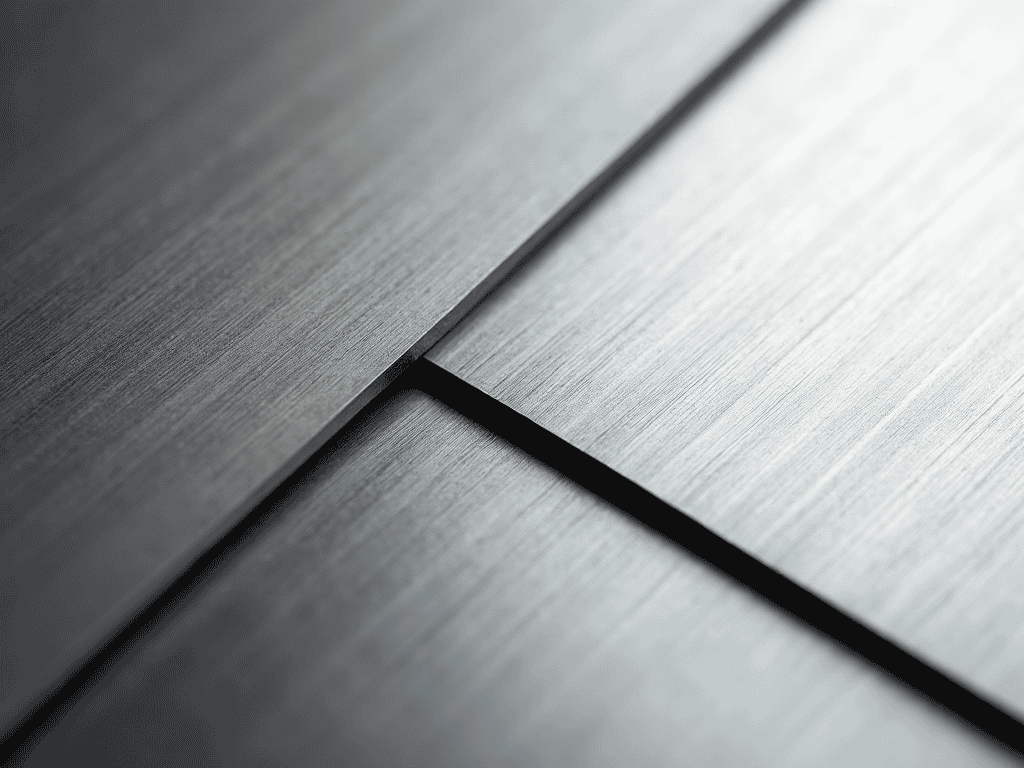
The finishing is different too. Titanium does not take a bright mirror polish the way steel does, so titanium watches tend towards brushed surfaces and a matte grey look. Some people prefer exactly that; others miss the flash.
Where titanium clearly wins
Sensitive skin is the strongest case. Common stainless steel grades contain nickel, which is the most frequent cause of contact allergy from a watch, and titanium contains none at all.
Salt water is the second. Titanium resists corrosion better than steel, which is why it appears so often on serious dive watches and why it suits anyone who wears a watch in the sea regularly. Our guide to what makes a real dive watch covers the rest of what those watches need.
Large watches are the third. A 44 mm steel diver is heavy enough to move around on the wrist; the same case in titanium simply stays put. Our watch size calculator covers the dimensions side of that decision. Our affordable dive watch guide covers the category where the weight saving is felt most.
Which one to buy
Buy steel for a first good watch, a dress watch, or anything you want to look sharp for a decade. It is tougher, it polishes, it is cheaper, and it is what almost the entire industry is built around.
Buy titanium if the watch is large, if you have a nickel sensitivity, or if it is going in the sea often. Those three cases are real and the premium is justified in all of them.
Do not buy titanium expecting it to be more scratch resistant, because without hardening it is the opposite. Our Rado guide covers the brand that took the hardness question furthest, with a ceramic that is several times harder than steel and cannot be scratched by anything in ordinary use.
Frequently asked questions
Is titanium better than stainless steel for a watch?
It is lighter, nickel free and more corrosion resistant, which suits large watches, sensitive skin and sea water. Steel is tougher, cheaper and takes a better polish, which suits most other cases.
How much lighter is a titanium watch?
Around 40 percent. Titanium has a density near 4.5 grams per cubic centimetre against roughly 7.9 for watch-grade stainless steel.
Does titanium scratch more easily than steel?
Yes, in its common watch grades, unless the manufacturer applies a surface hardening treatment. If a titanium watch does not mention hardening, expect it to mark more readily than steel.
Is titanium hypoallergenic?
It contains no nickel, which is the most common cause of contact allergy from a watch case or bracelet. That makes it the sensible choice for anyone with a known nickel sensitivity.
Why do titanium watches look duller than steel?
Titanium does not take a bright mirror polish the way steel does, so cases tend towards brushed finishes and a warm matte grey. Many buyers prefer that look, but it is a genuine difference.
The verdict
Titanium solves three specific problems very well: weight on a large watch, nickel on sensitive skin, and corrosion in salt water. Outside those, steel is the better material and the cheaper one.
Handle both before deciding. Some people love how a titanium watch disappears on the wrist and some find it feels hollow, and no specification predicts which you will be.

Daniel Hart is the editor of Watch The Watch. He researches and writes the site’s buying guides, brand comparisons, and explainers, focused on accessible, enthusiast-level watches — affordable automatics, divers, field and dress watches, everyday quartz, and the straps, winders and tools that go with them. The goal is practical, budget-aware advice that helps readers choose the right watch for their wrist and their budget. Recommendations draw on manufacturer specifications and the wider enthusiast community.