
Daniel Hart · ·
It is one of the most common questions I get about American watch brands, and the honest answer matters more than the marketing does. So let me say it plainly: Bulova is not a luxury brand. It is an accessible, mid-tier, American-heritage maker that punches well above its price.
That is not an insult. It is a compliment dressed up as a clarification. Bulova has done things in horology that genuinely expensive brands never have, including putting a chronograph on the surface of the moon. But the watches themselves live in the affordable-to-mid range, not the world of Swiss luxury.
If you want the full picture, here is how a brand like Bulova actually stacks up once you strip away the catalog gloss.
The short answer
No, Bulova is not a luxury watch brand in the way Rolex, Omega, or Jaeger-LeCoultre are. It sits in the accessible and mid-tier segment, with most models priced where a curious buyer or a first serious-watch owner can comfortably reach. What Bulova offers instead of prestige is genuine heritage, a couple of legitimately special models, and strong value for the money.
Bulova: background & heritage
Bulova was founded in New York in 1875 by Joseph Bulova, and for much of the 20th century it was a serious force in American watchmaking. It pioneered standardized, interchangeable parts, ran some of the earliest radio and television advertising in history, and produced military and aviation timepieces during both World Wars.
Its biggest technical claim is the Accutron, the tuning-fork watch from the 1960s that hummed instead of ticked and kept time better than mechanical watches of its era. Bulova electronics also flew on NASA missions, and a Bulova chronograph was worn on the lunar surface during Apollo 15 when an astronaut’s standard-issue watch failed.
Today Bulova is owned by Japan’s Citizen Group, which acquired it in 2008. That ownership matters: it means Bulova has access to large-scale movement manufacturing and quartz expertise, but it also means the brand is run as a high-volume, value-focused operation rather than a boutique luxury house.
Quality, movements & value
Most Bulova watches run on quartz movements, and the brand’s signature here is the Precisionist line, a high-frequency quartz movement that vibrates at 262 kHz. That gives it accuracy of around ten seconds a year and, on the chronograph versions, a smooth sweeping seconds hand that mimics a mechanical watch. It is a genuinely clever piece of engineering at the price.
Bulova also offers mechanical automatics, often using Miyota movements from sister company Citizen, plus the revived Accutron sub-brand for buyers who want something more electronically exotic. Fit and finish are solid for the money: decent steel cases, sapphire on the better models, and styling that ranges from clean dress pieces to bold sport divers.
Where the honesty has to come in: Bulova is not building in-house haute horology, the bracelets and clasps on cheaper models can feel ordinary, and a lot of the catalog leans on fashion-driven designs that will not hold collector value. Bulova is about getting a lot of watch for your money, not about long-term investment or status signaling. Judge it on that basis and it almost always delivers.
Who Bulova is for
- First-time buyers who want a real heritage brand without spending Swiss money.
- People who value accuracy and reliability over mechanical romance.
- Fans of a specific design or the genuine history behind the Lunar Pilot.
- Anyone wanting a good-looking daily wearer they will not stress about scratching.
Two Bulova watches worth knowing
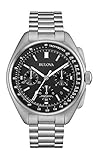
The Bulova Lunar Pilot Chronograph is the one to know. It is a modern reissue of the very chronograph an astronaut wore on the moon during Apollo 15, powered by the brand’s high-frequency quartz movement for a fast, precise chronograph action. It carries more real space history than watches costing many times more, and it is the single best argument for why Bulova matters.
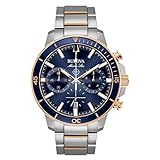
The Bulova Marine Star is the brand’s popular sport line, built around bold, sometimes flashy dive-styled looks with luminous dials and water resistance for everyday use. It is not a serious tool diver, but it is an eye-catching, durable daily watch that shows off Bulova’s value-first approach at an accessible price.
Frequently asked questions
Is Bulova a luxury brand?
No. Bulova is an accessible, mid-tier American-heritage brand, now owned by Citizen. It offers strong value and real history, but it does not compete with luxury Swiss makers on price, materials, or prestige.
What price tier is Bulova in?
Most Bulova watches sit in the affordable-to-mid range, well below entry Swiss luxury. The Accutron sub-brand reaches higher, but core Bulova is firmly value-oriented rather than luxury.
Are Bulova watches good quality?
Yes, for the money. The high-frequency Precisionist quartz is genuinely accurate, build quality is solid, and the better models use sapphire crystals. Just do not expect in-house mechanical finishing or investment-grade value.
What is Bulova best known for?
The Accutron tuning-fork watch, the high-frequency Precisionist movement, and the moon-flown Lunar Pilot chronograph. Those three are the heart of the brand’s reputation. If you want the wider context, the most expensive watch brands and whether a Rolex holds its value are the natural next reads.

Daniel Hart is the editor of Watch The Watch. He researches and writes the site’s buying guides, brand comparisons, and explainers, focused on accessible, enthusiast-level watches — affordable automatics, divers, field and dress watches, everyday quartz, and the straps, winders and tools that go with them. The goal is practical, budget-aware advice that helps readers choose the right watch for their wrist and their budget. Recommendations draw on manufacturer specifications and the wider enthusiast community.
