Daniel Hart · ·
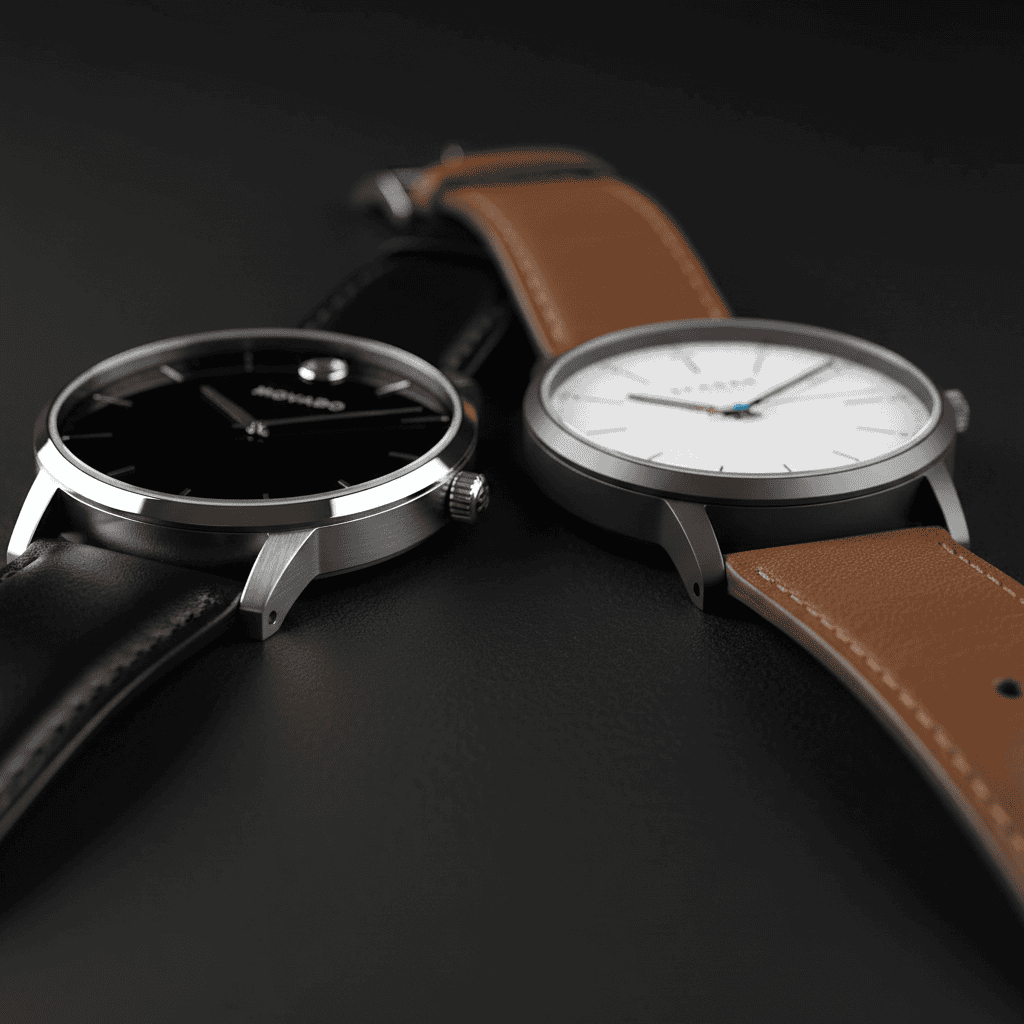
Both of these watches remove everything they can from the dial. Both run quartz. Both are honest about being design objects rather than machines.
One costs about $650 and the other about $78. The gap is not build quality, it is provenance, and whether provenance is worth eight times the money is a genuinely interesting question.
Here is what each one is actually selling.
The short answer
What each one is selling
The Movado Museum dial was designed in 1947 by Nathan George Horwitt, a Bauhaus-influenced designer who stripped the dial to a single dot at twelve standing for the sun at noon. In 1960 it became the first watch dial accepted into MoMA’s permanent collection, where it remains.
Skagen sells Danish design language through Fossil Group, which owns the brand outright. Thin cases, uncluttered dials, mesh bracelets. It is coherent and disciplined, but it is not a museum piece.
Fuller takes are in the Movado guide and the Skagen guide.
Head to head
Both are quartz, so nobody is buying mechanics. Movado uses Swiss quartz, Skagen uses standard quartz through Fossil’s supply chain, and either will run for years on battery changes.
Skagen offers one thing Movado does not: a solar-powered movement in the Grenen line at around $200, which removes battery changes entirely. That is a real technical advantage at a third of the Movado price.
Water resistance is modest on both, mostly 3 to 5 ATM. Our water resistance checker spells out what that permits.
| Movado Museum Classic | Skagen Signatur | |
|---|---|---|
| Sells | A 1947 design in MoMA’s collection | Danish design language |
| Owner | Movado Group | Fossil Group (owned brand) |
| Movement | Swiss quartz | Quartz, solar on Grenen |
| Crystal | Sapphire on most references | Mineral |
| Water resistance | Modest, check reference | 3 to 5 ATM |
| Price | About $650 | About $78 |
Where the money actually goes
With Movado, into provenance and into sapphire crystal on most current references, which Skagen does not offer at any price in its main lines.
With Skagen, into nothing but the watch, because Fossil owns the brand and pays no licence fee. That is why a Signatur costs less than a tenth of the Movado for a comparable movement class.
There is one corporate curiosity worth knowing. Movado Group also owns MVMT, so the same parent sells minimalist watches at $118 and at $650, which puts the Museum premium in perspective.
Which to buy
Skagen if the appeal is minimalism generally. It does the look properly, costs almost nothing, and the solar option is genuinely useful.
Movado if the appeal is that particular dial. You cannot get the Horwitt design anywhere else, and it is a legitimately important object, which is a different kind of value from specification.
Neither if you want watchmaking. At $650 the money reaches mechanical Swiss and Japanese watches, and our Tissot versus Seiko comparison covers that road.
The three to consider
The Movado that matters and the two Skagen models that make the value case.


As an Amazon Associate, Watch The Watch earns from qualifying purchases at no extra cost to you. See our affiliate disclosure.
Frequently asked questions
Is Movado worth eight times the price of Skagen?
Only if the Museum dial specifically is what you want. On movement and construction the gap is far smaller than the price; on design provenance the Movado is unique.
Why is the Movado dial famous?
Nathan George Horwitt designed it in 1947 with a single dot at twelve for the sun at noon, and in 1960 it became the first watch dial accepted into the Museum of Modern Art’s permanent collection.
Are both quartz?
Yes. Movado’s Museum and Bold lines are Swiss quartz and most of the Skagen range is standard quartz, with solar available on the Skagen Grenen models.
Which has better crystal?
Movado, which fits sapphire on most current references. Skagen uses mineral crystal across its main lines, which scratches considerably more easily.
Do Movado and MVMT share an owner?
Yes. Movado Group acquired MVMT in 2018, so the same parent sells minimalist watches at around $118 and at around $650.
The verdict
Two watches that remove everything they can from the dial, separated by a museum acquisition in 1960 and about five hundred and seventy dollars.
Skagen is the better watch and Movado is the better object. Only one of them is in a permanent collection, and only one of them costs less than a nice dinner.

Daniel Hart is the editor of Watch The Watch. He researches and writes the site’s buying guides, brand comparisons, and explainers, focused on accessible, enthusiast-level watches — affordable automatics, divers, field and dress watches, everyday quartz, and the straps, winders and tools that go with them. The goal is practical, budget-aware advice that helps readers choose the right watch for their wrist and their budget. Recommendations draw on manufacturer specifications and the wider enthusiast community.