
Daniel Hart · ·
Ask any watch enthusiast where the modern Swiss industry would be without Swatch, and you will get the same answer: probably nowhere. So when people ask whether Swatch watches are good, the honest reply is that yes, Swatch makes genuinely good watches for what they are — affordable, Swiss-made, accurate, and far more interesting than the plastic cases suggest.
These are not heirlooms. They are not built to be passed down or admired under a loupe. But for the money, they punch well above their weight, and one model in particular — the Sistem51 — is a small engineering miracle.
If you want fun, color, Swiss quartz reliability, or an automatic movement at a price that should not exist, Swatch delivers. If you want metal, prestige, or longevity measured in decades, look elsewhere.
The short answer
Swatch watches are good value, honest, and reliably Swiss. The quartz models keep excellent time and cost very little; the Sistem51 automatic is a legitimately remarkable movement at its price. The trade-off is the plastic construction, which feels cheap in hand and limits long-term durability. Buy a Swatch for what it is — a cheerful, well-engineered everyday watch — and you will not be disappointed.
Swatch: background & heritage
Swatch launched in 1983, and the timing was no accident. Cheap, accurate quartz watches from Japan had gutted the Swiss industry through the 1970s — the so-called Quartz Crisis. Swiss factories were closing, and the country’s watchmaking reputation was on the ropes.
The answer, engineered largely under Nicolas Hayek, was a radically simplified plastic quartz watch with only 51 parts, made on automated lines at a price ordinary people could afford. It was Swiss, it was fun, and it sold by the tens of millions. Swatch is, quite literally, the brand that saved Swiss watchmaking.
That success funded the wider Swatch Group, which today owns Omega, Longines, Tissot, Hamilton, Breguet, Blancpain and more. So while the watch on your wrist costs little, the company behind it sits at the center of the entire Swiss industry.
Quality, movements & value
Swatch runs two broad tiers. The bulk of the range is Swiss quartz — accurate, dependable, and effectively maintenance-free aside from a battery every few years. These movements are exactly what made the brand famous, and they do their job without fuss.
The headline act is the Sistem51, an automatic movement built from just 51 parts and assembled entirely by machine, sealed and held together by a single central screw. A traditional mechanical movement has well over a hundred components and demands skilled hand assembly. The Sistem51 delivers a genuine self-winding watch, with a roughly 90-hour power reserve, at a fraction of the usual cost. As mechanical timekeeping it will not match a finely regulated Swiss chronometer, but as an engineering and value proposition it is one of the most impressive things in watchmaking.
Now the honest part. Most Swatches are plastic — case, crystal, and often the strap. The acrylic crystals scratch, the cases can feel toy-like, and these are sealed units that are not built to be serviced or repaired in the traditional sense. Water resistance is modest. None of that is a scandal at the price; it is simply the bargain you are striking. Pay little, get a fun and capable watch, accept that it is not metal-and-sapphire built to last a lifetime.
Who Swatch is for
- First-time buyers who want something Swiss without spending much
- People who like color, design collaborations, and rotating their watch by mood or outfit
- Anyone curious about owning an automatic movement on a tight budget (Sistem51)
- Travel, beach, festival, or knock-about wear where you would not risk a metal watch
- Not for buyers seeking prestige, resale value, or a single watch to last decades
Two Swatch watches worth knowing
The Swatch Sistem51 Automatic is the one to point any skeptic toward. It is the rare watch that justifies the brand on its own: a self-winding mechanical movement of 51 parts, a long power reserve, and a transparent caseback so you can watch the rotor turn. It feels like a genuine watchmaking achievement rather than a fashion piece, and it is the best demonstration of what Swatch can do.
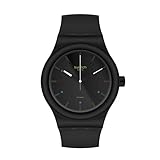
The Swatch Big Bold takes the opposite approach: a large, lightweight quartz watch with an oversized case that, because it is plastic, stays comfortable on the wrist despite its size. It is bold, easy to read, and inexpensive — a good entry point for anyone who likes a big modern look without the weight or cost of a steel diver.

Frequently asked questions
Are Swatch watches good?
Yes, for what they are. They are accurate, genuinely Swiss-made, and excellent value. The quartz models are reliable everyday watches and the Sistem51 is a standout automatic at its price. The main compromise is the plastic build, which feels cheap and limits durability and serviceability.
Are Swatch watches a luxury brand, and are they expensive?
No. Swatch sits firmly at the affordable, accessible end of the market — that was the entire point of its creation. Prices are low, with the mechanical Sistem51 costing a bit more than the standard quartz pieces. If you want luxury from the same parent company, that is what stablemates like Omega and Longines are for.
Are Swatch watches real Swiss watches?
Absolutely. They are designed and made in Switzerland and carry Swiss movements. Swatch is one of the most important names in modern Swiss watchmaking and the foundation of the group that owns many prestige brands.
Will a Swatch last a long time?
It can last many years with light, sensible use, but it is not built for decades of service the way a metal mechanical watch is. The plastic cases scratch, the units are essentially non-serviceable, and water resistance is limited. Treat it as a cheerful, replaceable everyday watch rather than a lifetime piece. Worth reading alongside this: whether Tissot is a good brand and quartz against mechanical movements.

Daniel Hart is the editor of Watch The Watch. He researches and writes the site’s buying guides, brand comparisons, and explainers, focused on accessible, enthusiast-level watches — affordable automatics, divers, field and dress watches, everyday quartz, and the straps, winders and tools that go with them. The goal is practical, budget-aware advice that helps readers choose the right watch for their wrist and their budget. Recommendations draw on manufacturer specifications and the wider enthusiast community.
