
Daniel Hart · ·
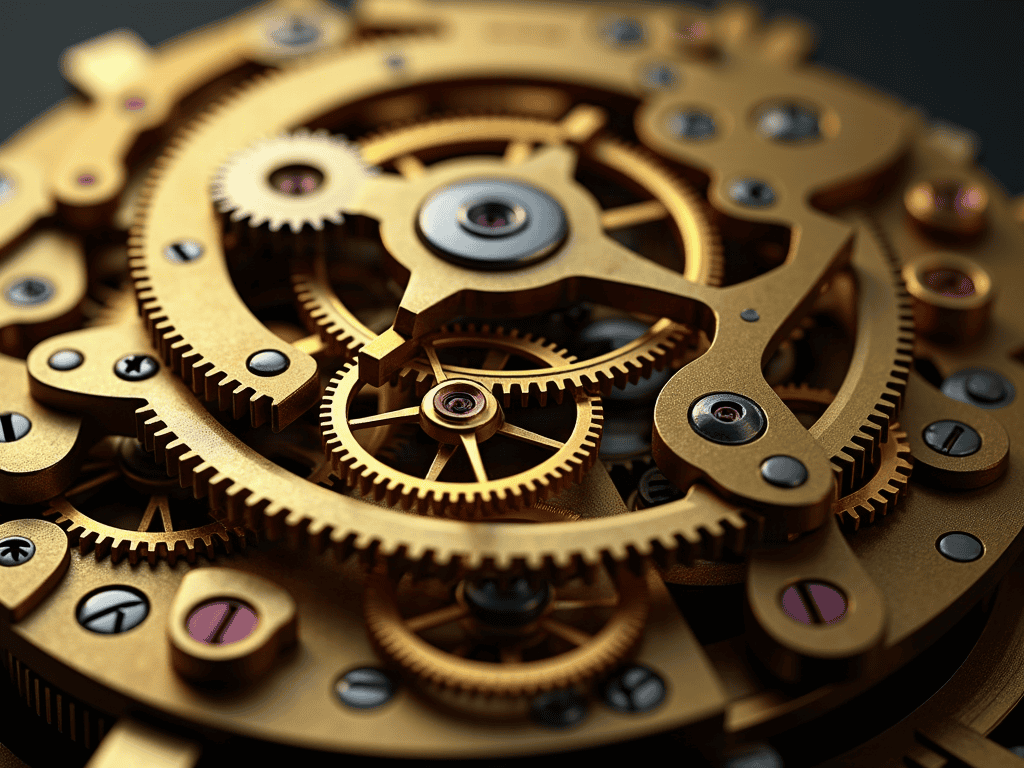
Complication is a word that sounds like a problem and means the opposite. In watchmaking it simply describes any function a watch performs beyond telling the time.
A date window is a complication. So is a chronograph, a moon phase, a second timezone and a perpetual calendar. The word covers the trivial and the extraordinary with equal calm.
Understanding the term is useful because it is how the entire industry prices its watches.
The short answer
What counts, from trivial to absurd
At the simple end sit the date, the day and date, and a running seconds subdial. These add a handful of parts and appear on watches costing under a hundred dollars. Our day-date explainer covers the most common of them.
In the middle sit the chronograph, the second timezone, the power reserve indicator and the moon phase. These are the complications most enthusiasts actually own, and each is a distinct mechanism layered onto a base movement.
At the far end sit the perpetual calendar, the minute repeater and the tourbillon, which is where prices leave ordinary life entirely. The Federation of the Swiss Watch Industry defines the vocabulary in its watchmaking dictionary.
| Complication | What it does | Where it appears |
|---|---|---|
| Date | Shows the day of the month | Almost everywhere, from $50 |
| Day and date | Adds the weekday | Common on entry automatics |
| Chronograph | Times elapsed intervals | From about $150 in meca-quartz |
| GMT | Shows a second timezone | From about $200 since the NH34 |
| Power reserve | Shows remaining wind | Mid-range mechanical watches |
| Moon phase | Tracks the lunar cycle | Dress watches, wide price range |
| Perpetual calendar | Handles month lengths and leap years | Four figures and well beyond |
Why each one costs what it does
A complication is not just a hand on a dial. It is a gear train, levers and springs that have to be driven by the same mainspring that runs the watch, without stealing so much energy that timekeeping suffers.
That is why complications make watches thicker and shorten power reserves, and why a thin base movement such as the ETA 2892 is so valuable to the industry. Our 2892-A2 explainer covers exactly that role.
Servicing scales the same way. More parts means a longer job and a bigger bill, which is a real ownership cost rather than a theoretical one.
Which complications are worth having
A date is worth having if you use it and an irritation if you do not, because it needs correcting at the end of every short month. That is the honest trade nobody mentions at the point of sale.
A second timezone is genuinely useful to a specific person and decorative to everyone else. The question to ask about any complication is whether you will operate it, or only look at it. Our NH34 explainer covers the version that made GMT affordable, including the limitation buyers usually discover late.
A moon phase is decorative and openly so, and there is nothing wrong with that. Nobody has ever needed a wristwatch to know the phase of the moon.
The simplest watch is often the best one
There is a reason the plainest watches age best. A three-hand dial has nothing to unbalance, nothing to correct and nothing extra to break, and it stays legible at a glance in a way a busy dial does not.
Complications also compete for space. A chronograph subdial usually eats the running seconds, and a date window usually eats an hour marker, which is a small aesthetic tax people notice only after buying.
Buy the complication you will use, and be honest about whether that number is zero. Our watch finder quiz weighs it against the other decisions, and our Oris guide shows what the money buys when a brand spends it on the movement instead.
Frequently asked questions
What is a complication on a watch?
Any function beyond showing hours, minutes and seconds. A date window is the simplest and most common complication; a perpetual calendar is among the most involved.
Is a date window really a complication?
Yes. The term is technical rather than evaluative, and it covers everything from a date wheel to a minute repeater.
Why do complications make watches more expensive?
Each one adds a gear train, levers and springs that must run off the same mainspring without harming timekeeping. That means more parts, more assembly, more thickness and a larger service bill.
Which watch complication is most useful?
A date for most people, and a second timezone for anyone who genuinely tracks one. The useful test is whether you will operate the complication or only look at it.
Do complications reduce power reserve?
They can, because they draw energy from the same mainspring that drives the timekeeping. It is one reason thin, efficient base movements are so valuable to manufacturers.
The verdict
Complication is the industry’s word for anything extra, and it maps onto price more directly than almost any other specification.
The plainest watch on the shelf is usually the most legible and the cheapest to keep. Add complications deliberately, not because a busier dial looks like better value.

Daniel Hart is the editor of Watch The Watch. He researches and writes the site’s buying guides, brand comparisons, and explainers, focused on accessible, enthusiast-level watches — affordable automatics, divers, field and dress watches, everyday quartz, and the straps, winders and tools that go with them. The goal is practical, budget-aware advice that helps readers choose the right watch for their wrist and their budget. Recommendations draw on manufacturer specifications and the wider enthusiast community.
