
Daniel Hart · ·
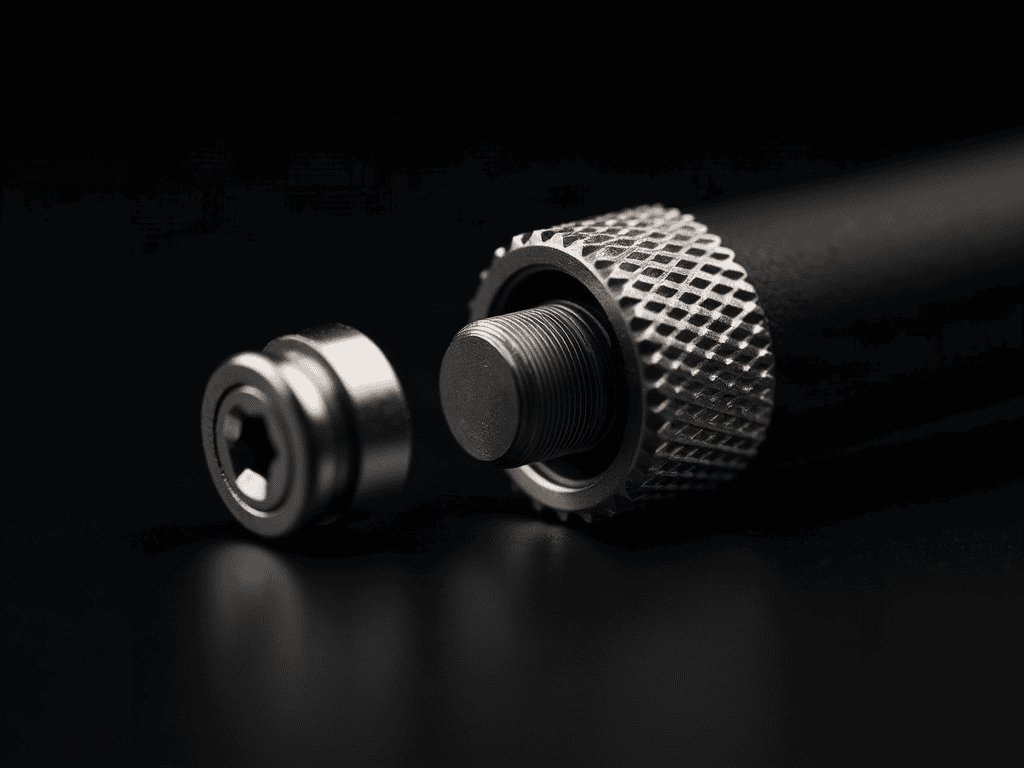
The crown is the small knob on the side of your watch, and on a serious water-resistant watch it does not simply pull out. It screws.
That difference is the single most important piece of hardware in keeping water out, and it is also the one seal the owner opens by hand and can forget to close.
Here is how it works, how to tell if you have one, and the mistake that ruins them.
The short answer
How the seal actually works
The case has a threaded tube passing through it. The crown carries matching threads and a rubber gasket inside. Screwing the crown home compresses that gasket against the tube and closes the gap.
A push crown has a gasket too, but it relies on friction alone to stay seated and to hold pressure. That is adequate for splashes and inadequate for swimming, which is why the ratings differ so sharply.
The crown is the largest deliberate hole in a watch case, so it is where water arrives first. Seiko covers crown handling and the rest of mechanical ownership on its mechanical watch knowledge page.
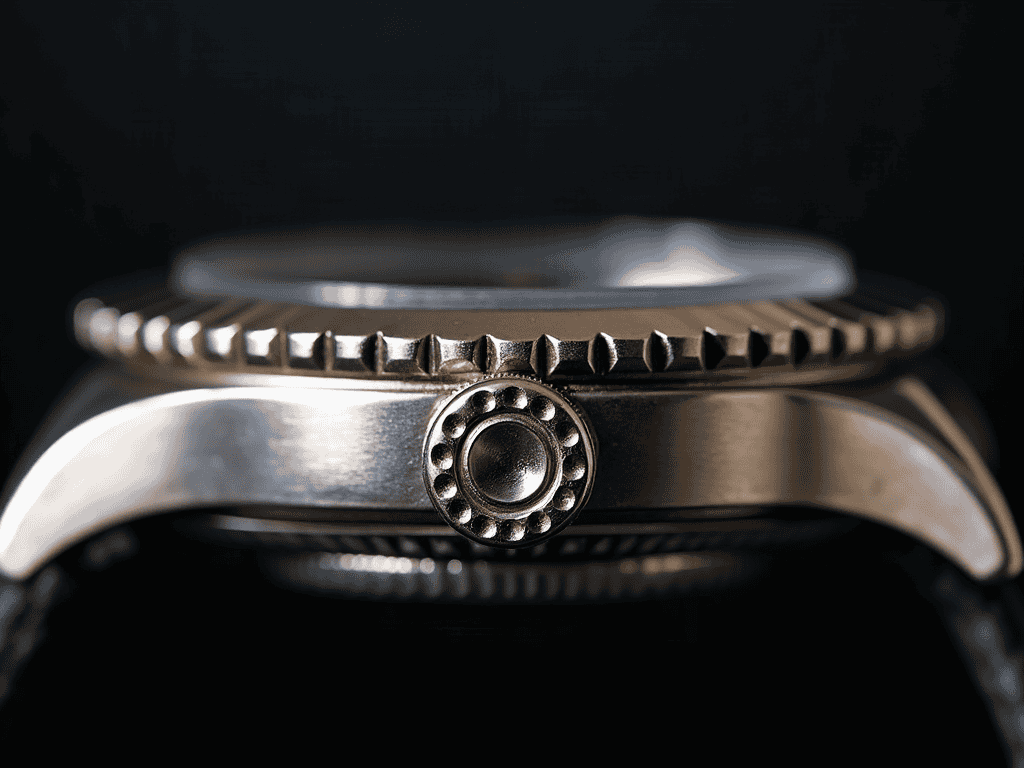
How to tell which one you have
Try to pull the crown gently. If it moves out immediately, it is a push crown. If it does not move at all, it is screwed down, and you unscrew it by turning it towards you, anticlockwise, until it springs free.
The spring is the giveaway. A screw-down crown pops outward slightly the moment the threads release, and that small jump is how you know it was closed properly in the first place.
Screwing it back is the step people get wrong. Press the crown in firmly first, then turn clockwise. Turning before pressing is what cross-threads the tube.
| Screw-down crown | Push crown | |
|---|---|---|
| Seal method | Threads compress a gasket | Friction on a gasket |
| Typical rating | 100 m and above | Up to 50 m |
| Opens by | Unscrewing anticlockwise | Pulling out |
| Risk | Left unscrewed by the owner | Nothing to forget |
| Found on | Dive and tool watches | Dress and fashion watches |
The failure that costs the most
Cross-threading is the expensive mistake. Forcing a crown at an angle strips the fine threads in the case tube, and repairing that means replacing the tube, which is a case job rather than a quick fix.
If the crown does not begin turning with almost no resistance, stop and reseat it. It should never need force. That single habit prevents the most costly avoidable damage a watch owner can do.
The other failure is simpler and more common: setting the time, wearing the watch, and never screwing the crown back down. The case is then rated for nothing at all, whatever the caseback says. Our water resistance guide covers what those ratings mean when the case is actually sealed.
What it means for buying
A screw-down crown is a reliable signal that a watch was designed as a tool rather than styled as one. It costs the manufacturer real money in machining, so it rarely appears on watches that only look rugged.
It is close to mandatory on anything you intend to swim or dive with, alongside a screwed caseback and a unidirectional bezel. Those three together are what separate a dive watch from a dive-styled one. Our dive bezel guide covers the second of those three, which is the one you actually operate underwater.
On a dress watch it is unnecessary and slightly unwelcome, because unscrewing a crown to set a watch you wear occasionally becomes a chore. Our Longines guide and Tudor guide cover brands that put one where it belongs and leave it off where it does not.
Frequently asked questions
What is a screw-down crown?
A crown that threads into a tube in the watch case and compresses a gasket as it tightens. It seals the largest opening in the case and is standard on dive watches.
How do I know if my watch has a screw-down crown?
Try to pull the crown gently. If it will not move, it is screwed down. Turn it anticlockwise and it will spring outward slightly when the threads release.
How do I close a screw-down crown properly?
Press the crown inward firmly first, then turn it clockwise. Turning before pressing is what cross-threads the case tube, which is an expensive repair.
Is a watch waterproof if the crown is not screwed down?
No. An unscrewed crown leaves the largest opening in the case unsealed, so the stamped rating does not apply at all until it is closed.
Do all dive watches have screw-down crowns?
Essentially all serious ones do, alongside a screwed caseback. It costs real money to machine, so it rarely appears on watches that only look rugged.
The verdict
A screw-down crown is a small piece of engineering that does more for real-world water resistance than any number on the caseback.
Press before you turn, and check it before water. Those two habits cover both the expensive failure and the common one.

Daniel Hart is the editor of Watch The Watch. He researches and writes the site’s buying guides, brand comparisons, and explainers, focused on accessible, enthusiast-level watches — affordable automatics, divers, field and dress watches, everyday quartz, and the straps, winders and tools that go with them. The goal is practical, budget-aware advice that helps readers choose the right watch for their wrist and their budget. Recommendations draw on manufacturer specifications and the wider enthusiast community.
