
Daniel Hart · ·

Shake an automatic watch gently near your ear and most of them make a noise. New owners find this alarming and it is nearly always the watch working correctly.
The rotor is a weighted semicircle that spins freely on a bearing, and on many movements you can hear and feel it.
Here is which noises are normal, and the one that is not.
The short answer
The rotor is what you are hearing
An automatic winds itself with a weighted rotor that swings on a central pivot. It spins freely, and in a metal case with very little inside to absorb sound, a freely spinning weight is audible.
One-way winding designs are the loudest. A movement that winds in one direction lets the rotor spin unresisted in the other, which produces a distinct whirr or a light stutter you can feel through the case. The Miyota 8215 is the best-known example, and the Caliber Corner entry for it documents the single-direction winding that causes it. Our Miyota 9015 explainer covers the family it belongs to.
Two-way winding movements are quieter because the rotor is doing work in both directions. Our ETA 2824-2 explainer and NH35 explainer cover two common ones.
Normal against not normal
Normal is a soft whirr as you move your arm, a light rattle if you shake the watch deliberately, and a faint sensation through the caseback. All of that is the rotor.
Not normal is a harsh grinding, a metallic scrape, or a distinct loose object sliding around inside. A grinding noise usually means the rotor is contacting something it should not, and a loose object is a screw or a part that has come free.
The distinguishing test is whether the noise tracks your movement smoothly. A rotor noise follows your arm. A loose part makes a noise of its own timing.
| Noise | Almost certainly | Action |
|---|---|---|
| Soft whirr when you move | The rotor spinning | Nothing |
| Light rattle when shaken | The rotor at the end of its travel | Nothing |
| Loud whirr, felt through the case | A one-way winding movement | Nothing |
| Harsh grinding | The rotor contacting something | Watchmaker, soon |
| Something loose sliding inside | A screw or part has come free | Watchmaker, stop wearing it |
| Rattle on a quartz watch | Not a rotor. Something is loose. | Watchmaker |
A rattle on a quartz watch is different
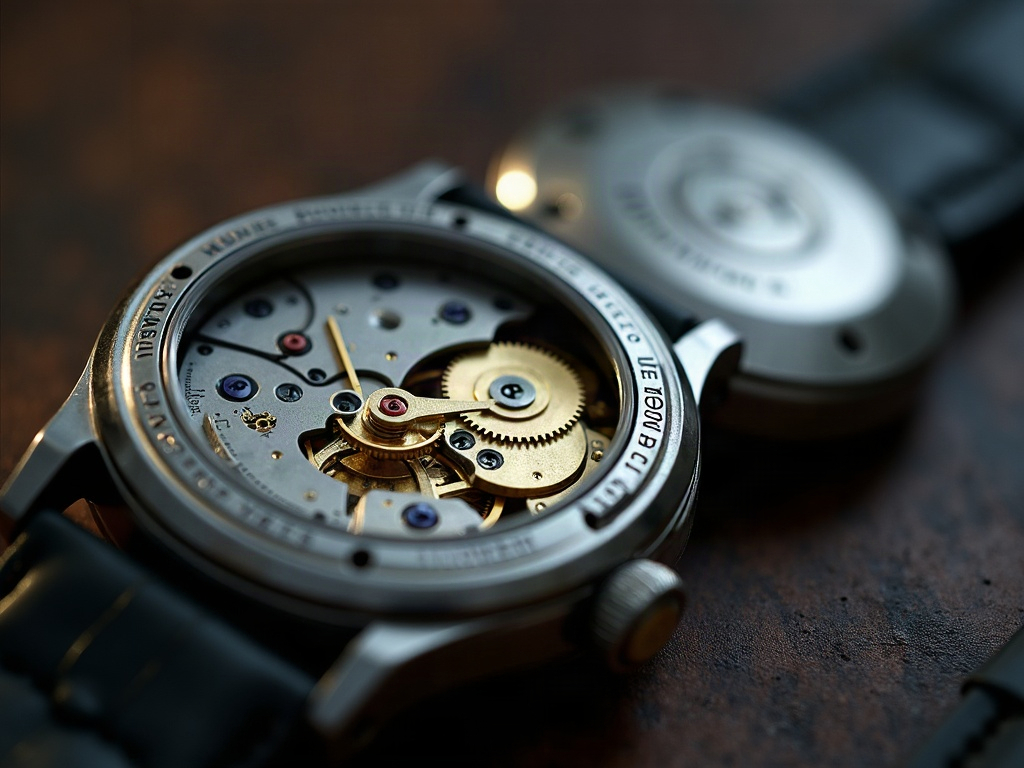
A quartz watch has no rotor. There is nothing inside it that is supposed to move freely, so a rattle means something has come loose.
Most often it is a battery clamp screw or a movement holding ring, both cheap to fix and both capable of doing damage if left to move around against the circuit.
Stop wearing it and have it opened. Our quartz and mechanical explainer covers why the two behave so differently.
If it is just louder than you expected
Some perfectly healthy movements are simply noisy, and there is no fix because nothing is wrong. It is a characteristic of the calibre rather than a defect, and it does not get worse.
If the noise genuinely bothers you, that is a movement preference to carry into the next purchase rather than a repair to book. Our watch finder quiz covers the wider decision.
And if the watch is also keeping poor time, that is the symptom worth chasing rather than the sound. Our guide to a watch losing time and running fast diagnostic cover both directions.
Frequently asked questions
Why does my automatic watch make a whirring noise?
It is the winding rotor spinning on its bearing. This is normal on most automatics, and one-way winding movements are noticeably louder because the rotor spins unresisted in one direction.
Is a rattling automatic watch broken?
Usually not. A light rattle when shaken is the rotor reaching the end of its travel. A harsh grinding or a distinct loose object sliding around is a different matter.
How do I tell a rotor noise from a real fault?
A rotor noise follows your arm movement smoothly. A loose part makes a noise on its own timing, and grinding is harsh rather than soft.
My quartz watch rattles. Is that normal?
No. A quartz watch has no rotor and nothing inside should move freely. It is usually a battery clamp screw or movement ring that has come loose, and it can damage the circuit.
Can a noisy rotor be quietened?
Not really, if nothing is wrong. Some movements are simply louder than others by design, and it is a characteristic rather than a defect.
The verdict
Nearly every noise an automatic makes is the rotor doing exactly what it exists to do, and some movements are just louder than their owners expected.
Grinding and loose objects are the two sounds worth acting on. A whirr that follows your arm is the watch winding itself.

Daniel Hart is the editor of Watch The Watch. He researches and writes the site’s buying guides, brand comparisons, and explainers, focused on accessible, enthusiast-level watches — affordable automatics, divers, field and dress watches, everyday quartz, and the straps, winders and tools that go with them. The goal is practical, budget-aware advice that helps readers choose the right watch for their wrist and their budget. Recommendations draw on manufacturer specifications and the wider enthusiast community.
