Daniel Hart · ·
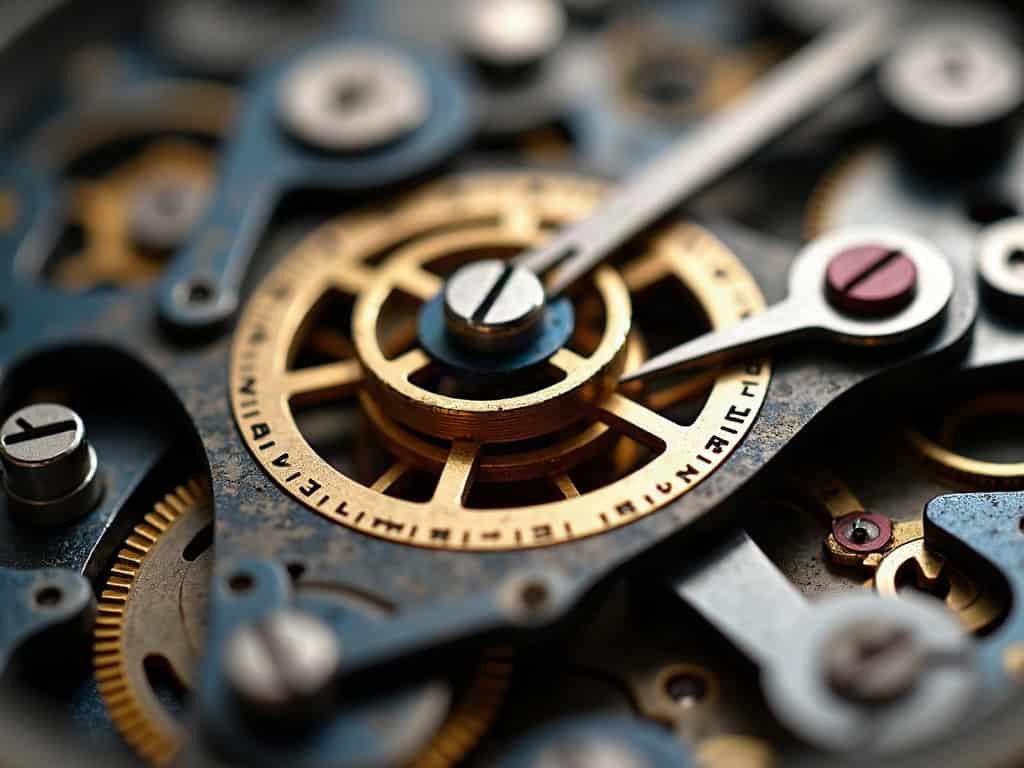
If you own a mechanical chronograph that did not cost as much as a car, you almost certainly own a 7750 or something derived from it.
It was designed in 1973, survived the quartz crisis that killed most of its contemporaries, and became the default answer to the question of how to build a chronograph. Half a century later nothing has displaced it.
It also explains a physical fact about chronographs that puzzles a lot of buyers: why they are all so big.
The short answer
Why chronographs are big
The 7750 is 30 mm in diameter and 7.9 mm thick. Wrap a case, a dial, a crystal and a caseback around that and you arrive at roughly 42 mm across and 14 mm tall almost regardless of what the designer wanted.
That is the real reason so few mechanical chronographs are small. It is not fashion, it is the movement dictating the architecture, and a brand can only design around it so far.
Anyone whose wrist finds 42 mm too large is not fighting a trend so much as a 1973 engineering decision. The alternative is a quartz or meca-quartz chronograph, where the module is far thinner.
Cam versus column wheel, and why it does not matter much
Enthusiasts distinguish two ways of controlling a chronograph. A column wheel is the elegant solution and gives a slightly crisper pusher feel. A cam, sometimes called a coulisse lever, is the cheaper and more robust one.
The 7750 uses a cam. That is the main thing purists hold against it, and it is also precisely why it survived: the cam design is easier to manufacture, easier to service and harder to break.
The specification is otherwise serious. The Caliber Corner entry for the 7750 lists 25 jewels and 28,800 vibrations per hour, with a power reserve in the region of 42 to 48 hours depending on version, and the movement is offered in grades that can be certified to chronometer standard.
| Specification | ETA Valjoux 7750 |
|---|---|
| Type | Automatic chronograph |
| Designed | 1973 |
| Diameter | 30 mm |
| Thickness | 7.9 mm |
| Jewels | 25 |
| Frequency | 28,800 vph (4 Hz) |
| Power reserve | About 42 to 48 hours |
| Chronograph control | Cam, not column wheel |
The wobble, and other things owners notice
The 7750 winds in one direction through a pawl system, and many owners can feel the rotor as a faint stutter when they move their wrist. It is characteristic rather than defective, and it is one of the ways to identify the movement without opening the watch.
Servicing is straightforward for the same reason the SW200 is: every watchmaker alive has worked on one, and parts are everywhere. A chronograph service costs more than a time-only service because there is more to do, not because the movement is exotic.
Derivatives are everywhere too. Many brands buy the base and modify it, sometimes heavily, so two watches described as 7750-based can feel quite different.
Where you meet it
It runs through the mid-tier Swiss chronograph market almost completely, and it appears in modified form well above that. Brands in the segment covered by our Longines guide and our Oris guide have both built chronographs on this architecture.
The cheaper alternative is meca-quartz, where a quartz timekeeping circuit drives a mechanical chronograph module. It gives you the crisp pusher action and the snap-back reset for a fraction of the money, without the mechanical timekeeping.
If you want a mechanical chronograph, this is the baseline the whole category is measured against. For where the tiers sit in finished watches, our Tudor guide covers the level above. Our ETA 2824-2 explainer covers the time-only movement from the same maker, and our chronographs under $1,000 guide covers where this calibre actually turns up.
Frequently asked questions
What is the ETA Valjoux 7750?
An automatic chronograph movement designed in 1973, with 25 jewels, a 28,800 vph beat rate and roughly 42 to 48 hours of power reserve. It is the most widely used mechanical chronograph movement in the world.
Why are 7750 chronographs so large?
The movement is 30 mm across and 7.9 mm thick. Once a case, dial and crystal are built around it the watch lands near 42 mm wide and 14 mm tall, whatever the designer intends.
Is a cam-actuated chronograph worse than a column wheel?
Not in reliability. A column wheel gives a slightly crisper pusher feel and is more prestigious; the cam used in the 7750 is cheaper to make, easier to service and more robust. That durability is why the design survived.
Can the 7750 be COSC certified?
Yes. It is supplied in several grades, and the higher grades are offered to chronometer specification and can carry COSC certification.
Why does my 7750 rotor feel like it stutters?
It winds in one direction through a pawl system, which produces a faint stutter as you move your wrist. It is a known characteristic of the movement rather than a fault.
The verdict
The 7750 is the most consequential chronograph movement ever made, and it earned that by being difficult to break rather than by being beautiful inside.
If a 42 mm chronograph is too big for your wrist, the movement is the reason and no brand can fully design around it. Meca-quartz is the honest alternative, not a smaller mechanical one.

Daniel Hart is the editor of Watch The Watch. He researches and writes the site’s buying guides, brand comparisons, and explainers, focused on accessible, enthusiast-level watches — affordable automatics, divers, field and dress watches, everyday quartz, and the straps, winders and tools that go with them. The goal is practical, budget-aware advice that helps readers choose the right watch for their wrist and their budget. Recommendations draw on manufacturer specifications and the wider enthusiast community.