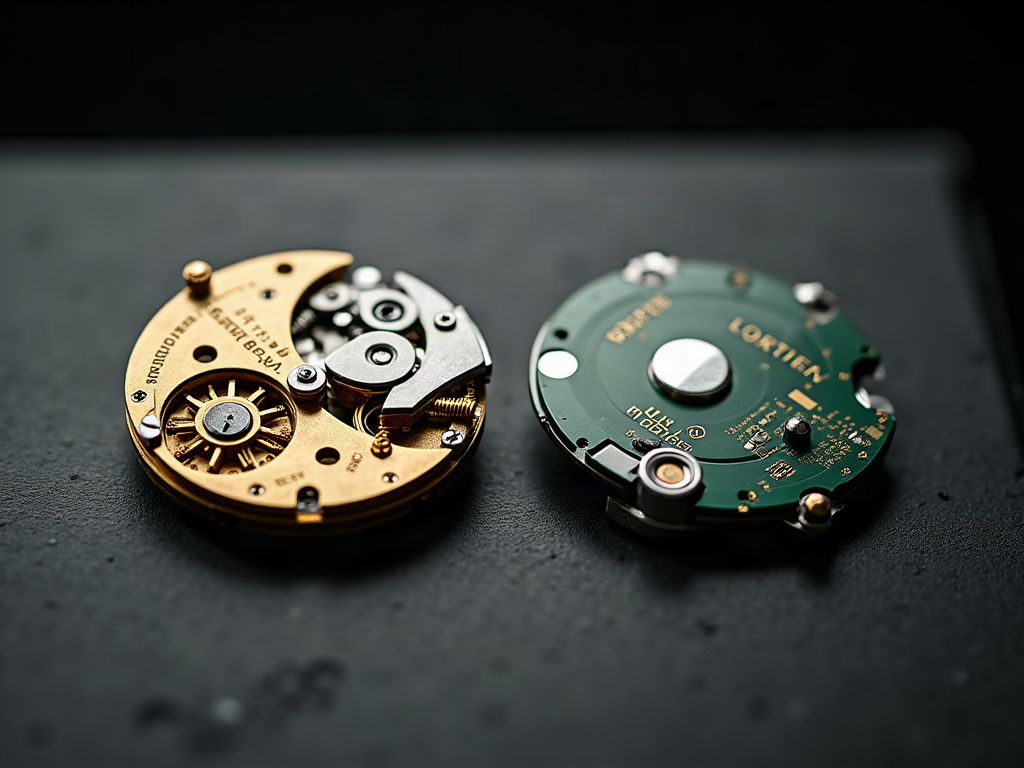
Daniel Hart · ·
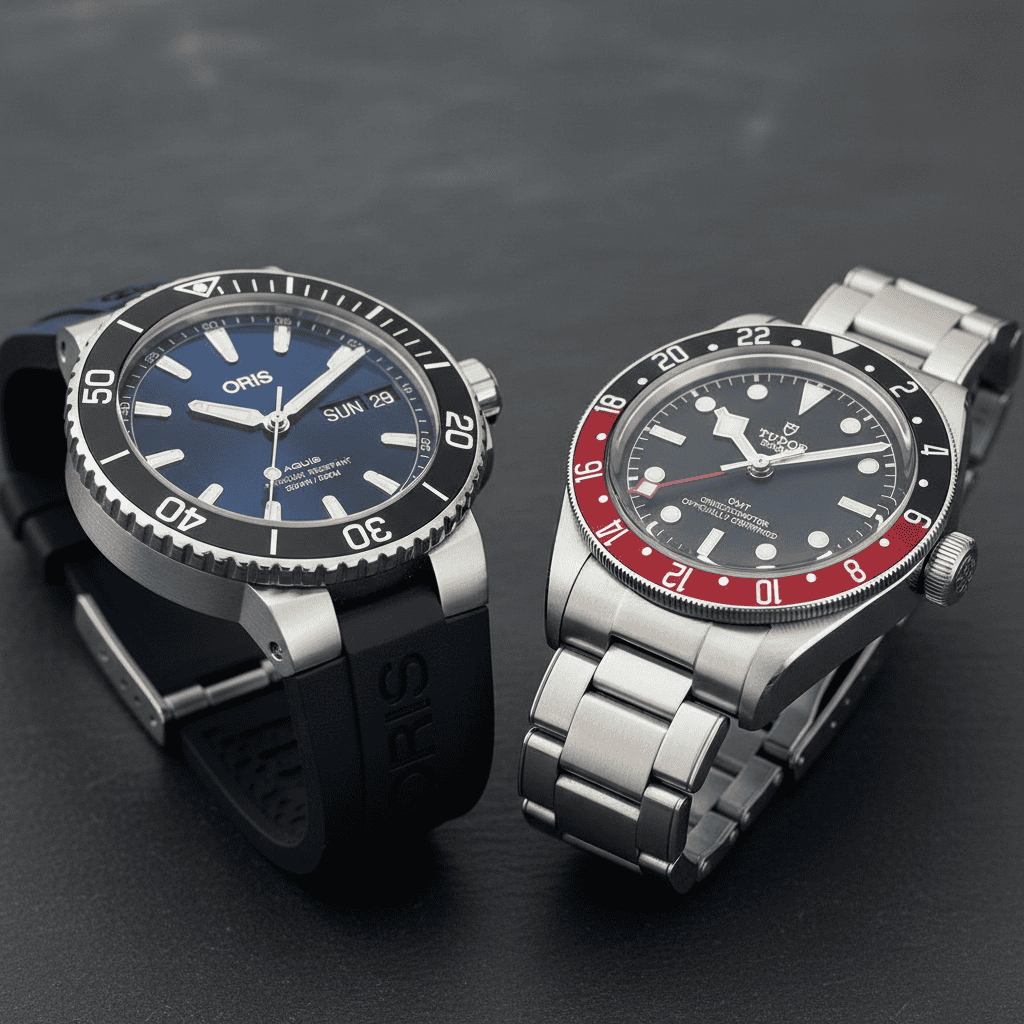
This is the most interesting pair in mid-luxury Swiss watchmaking, because the smaller company wins the specification argument outright.
Tudor has the Wilsdorf Foundation behind it and a movement company it part-owns. Oris has nobody, having been independent since 1904.
Oris offers a five-day power reserve and a ten-year warranty; Tudor offers about seventy hours and five years. That is not a close call on paper, and yet the answer is not automatic.
The short answer
Two ways to own a movement
Tudor’s manufacture calibres come from Kenissi, a movement company Tudor established and part-owns. They are COSC certified, run about 70 hours and use silicon balance springs. Tudor documents this on its own manufacture movement page.
Oris took the harder route for a small company and conceived the Calibre 400 itself. Five days of power reserve, strong anti-magnetism, and a ten-year warranty with ten-year service intervals.
Fuller context is in the Oris guide and the Tudor guide.

Head to head
The power reserve difference is practical rather than academic. A watch taken off on Friday is still running on Wednesday with a Calibre 400 and stopped by Monday evening with a 70-hour movement.
The warranty gap is starker. Ten years against five, from the company with no group to absorb the cost, which tells you what Oris thinks of its own engineering.
Tudor answers with COSC certification, which is an independent chronometer standard rather than a self-declared one, and with case finishing that is a visible step above.
| Oris (Calibre 400) | Tudor | |
|---|---|---|
| Ownership | Independent since 1904 | Hans Wilsdorf Foundation |
| Movement | Own calibre | Manufacture calibre by Kenissi |
| Power reserve | About 120 hours | About 70 hours |
| Certification | In-house standard | COSC |
| Warranty | 10 years | 5 years |
| Entry price | About $2,100 | About $3,950 |
Where Tudor wins
Finishing, and it is not subtle. Bezel edges, bracelet links and case chamfers on a Black Bay are executed to a standard Oris does not attempt at this price.
Recognition follows. A Tudor reads as a serious watch to people who know watches and to people who do not, which matters for a piece you will wear for a decade.
Resale is the third advantage and the most concrete. Independence cuts both ways, and Oris has the thinner secondary market. If you are likely to sell or trade, that difference is real money.
Which to buy
Oris if you are buying a watch to keep and you want the money in the engineering. The Calibre 400 specification is genuinely remarkable at the price, and the ten-year cover removes the main anxiety of mechanical ownership.
Tudor if you want the finishing and the badge, or if resale is part of the plan. Neither of those is a shallow reason, and the Black Bay is a very good watch on its own terms.
Whichever you choose, buy from an authorised dealer. Manufacturer warranties in this bracket are activated at the point of sale, so a marketplace watch from an unauthorised seller usually carries only that seller’s own guarantee, which on a ten-year Oris warranty means giving up the main reason to buy it.
The three to consider
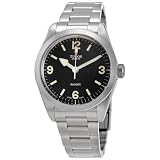
Entry points from both brands. Confirm the Oris reference carries Calibre 400 if the warranty is the point, and check the seller is authorised.
As an Amazon Associate, Watch The Watch earns from qualifying purchases at no extra cost to you. See our affiliate disclosure. Our dive watches under $1,000 guide covers where the Aquis lands against the field, and our Rolex pricing explainer covers the parentage Tudor is always measured against.
Frequently asked questions
Is Oris better than Tudor?
On movement specification and warranty, yes: 120 hours and ten years against about 70 hours and five. On finishing, recognition and resale, Tudor wins. They suit different priorities.
Which has the better movement?
It depends what you value. Tudor’s calibre is COSC certified and made by Kenissi, which Tudor part-owns. The Oris Calibre 400 has nearly double the power reserve and twice the warranty but no external certification.
Is Tudor worth the extra money?
For finishing and resale, often yes. A Black Bay is executed to a visibly higher standard and holds value better, which offsets part of the price gap if you ever sell.
Do all Oris watches have the Calibre 400?
No. Much of the range uses modified Sellita and ETA bases with the standard warranty. Check the specific reference if the ten-year cover matters.
Does the warranty survive a grey-market purchase?
Generally not. Manufacturer warranties in this segment are registered by an authorised dealer at the point of sale, so unauthorised purchases usually carry only the seller’s own guarantee.
The verdict
Oris wins the numbers and Tudor wins the object. A five-day reserve and a ten-year warranty from an independent is remarkable; so is the finishing on a Black Bay.
Buy Oris to keep and Tudor to keep and sell. Both are honest answers, and either one is a considerably better use of the money than anything in the fashion tier.

Daniel Hart is the editor of Watch The Watch. He researches and writes the site’s buying guides, brand comparisons, and explainers, focused on accessible, enthusiast-level watches — affordable automatics, divers, field and dress watches, everyday quartz, and the straps, winders and tools that go with them. The goal is practical, budget-aware advice that helps readers choose the right watch for their wrist and their budget. Recommendations draw on manufacturer specifications and the wider enthusiast community.