
Daniel Hart · ·
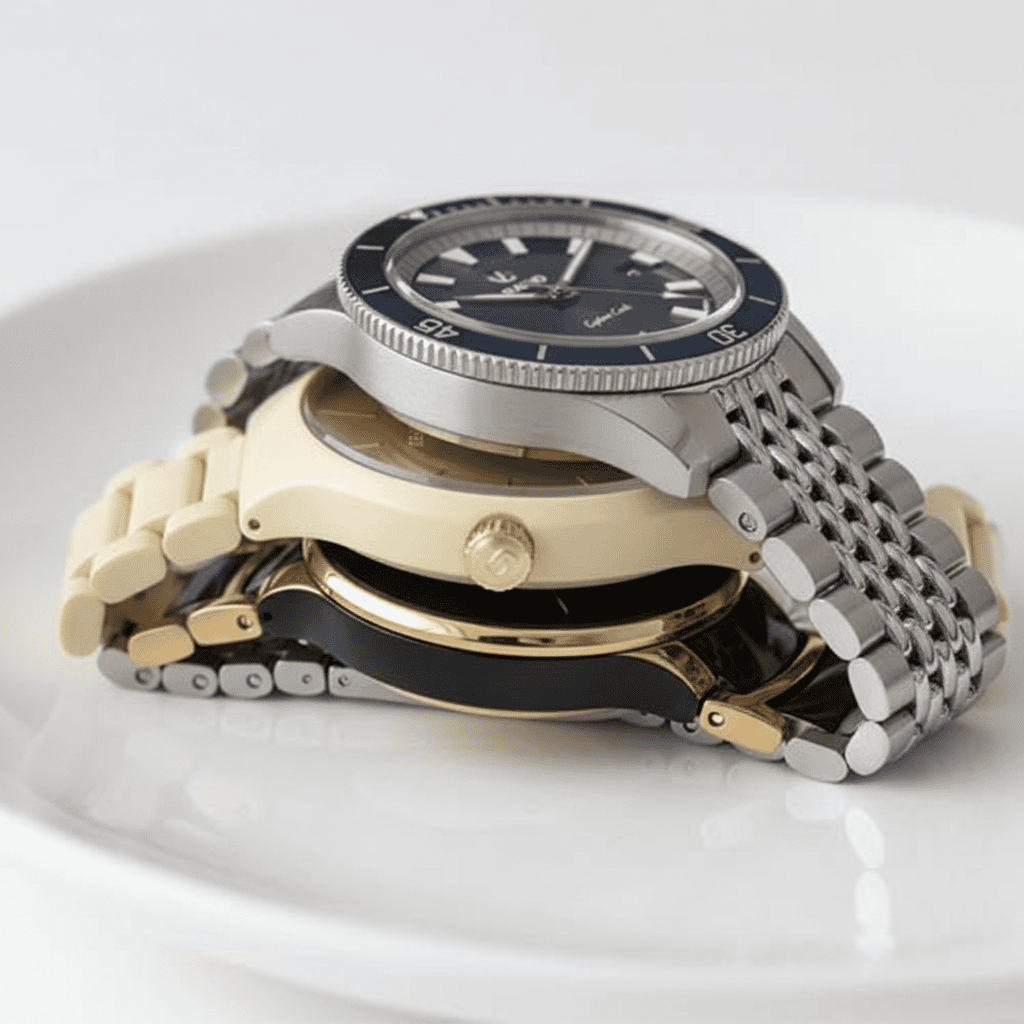
Most watch brands sell a movement, a heritage or a look. Rado sells a material, which is a stranger pitch and a more defensible one.
The company has spent decades on high-tech ceramic, and it is not marketing language borrowed from somewhere else. Ceramic is genuinely far harder than stainless steel, which changes how a watch looks after five years of daily wear.
Rado sits inside Swatch Group alongside Longines and Omega, so the mechanical foundations are solid. The question is whether a material is enough to build a watch brand on.
The short answer
The material argument, and why it holds
Steel scratches. Every steel watch worn daily picks up hairlines within weeks, and a polished steel bracelet shows them worst of all.
Rado publishes the figures on its own Art of Ceramic pages: high-tech ceramic measures around 1250 HV on the Vickers scale, which makes it up to five times harder than stainless steel and roughly ten times harder than 18k gold. It is also about 30 percent lighter than steel, which people notice on the wrist more than they expect.
One more consequence is worth knowing. The colour is not a coating: pigments are blended into the mineral powder before the ceramic is formed, so there is no plating to wear through. That is the opposite of how every fashion-tier gold-tone watch is finished.
The trade-off is honest and worth stating. Ceramic is hard but brittle, so it resists scratching and tolerates sharp impact less gracefully than steel. Drop a ceramic bracelet on a tiled floor and the failure mode is a chip rather than a dent.

What sits underneath the ceramic
Rado belongs to Swatch Group, which owns the movement maker ETA, so the calibres come from the same industrial base that supplies Longines and much of Swiss watchmaking.
The range splits between automatic and quartz, and the distinction matters for what you are paying for. The Captain Cook is an automatic diver with sapphire crystal at around $1,980. The True Thinline is quartz at about $2,400, where the money is buying the ceramic and the design rather than the mechanics.
Sapphire crystal is standard across the range, which combined with ceramic makes these among the most scratch-resistant watches at any price.
| Model | Case material | Movement | Crystal | Price |
|---|---|---|---|---|
| Captain Cook 42 | Steel | Automatic | Sapphire | About $1,980 |
| True Thinline 39 | High-tech ceramic | Quartz | Sapphire | About $2,400 |
| Centrix 39 | Ceramic and steel | Automatic | Sapphire | About $2,650 |
Buy the dealer before the watch
The caution that applies to every Swiss brand at this level applies here too. The manufacturer warranty is registered by an authorised dealer at the point of sale, not by the factory at manufacture.
Marketplace listings from unauthorised sellers usually substitute the seller’s own in-house guarantee. The discount is real, and so is what you give up.
It matters slightly more with ceramic, because a chipped ceramic component is a replacement rather than a polish, and replacement parts flow through authorised service channels.
Who Rado is for
Buy one if you are hard on watches and hate seeing them age. Nothing else at this price keeps its finish the way ceramic does, and that is a practical benefit rather than a talking point.
It also suits people who want a Swiss watch that does not look like every other Swiss watch. The True Thinline in particular is closer to industrial design than traditional watchmaking.
Skip it if you want mechanical credentials above all, because much of the range is quartz and the automatics are competent rather than remarkable. For a manufacture movement at similar money, Tudor is the stronger story, and for the longest warranty, Oris is.
Three Rado watches worth knowing
Chosen to show the split between the mechanical line and the material showcase. The authorised-dealer caveat applies to all of them.


As an Amazon Associate, Watch The Watch earns from qualifying purchases at no extra cost to you. See our affiliate disclosure. Our Swatch guide covers the group Rado belongs to and what that membership actually buys.
Frequently asked questions
Is Rado a good watch brand?
Yes. It belongs to Swatch Group, fits sapphire crystals throughout and has a genuine technical specialty in high-tech ceramic, which resists scratching far better than steel.
Who owns Rado?
Swatch Group, which acquired the brand in 1998 and also owns Omega, Longines, Tissot, Hamilton, Certina and the movement maker ETA.
Is Rado ceramic actually more scratch resistant?
Yes, substantially. High-tech ceramic sits far higher on the hardness scale than stainless steel, so a ceramic case and bracelet keep their finish for years. The trade-off is that ceramic chips rather than dents under sharp impact.
Are Rado watches automatic or quartz?
Both, and the distinction matters for value. The Captain Cook and Centrix lines are automatic, while several True models are quartz, where you are paying for the ceramic and the design rather than the movement.
Will Rado honour a warranty bought from a marketplace seller?
Only if that seller is an authorised dealer. Manufacturer warranties in this segment are activated at the point of sale, so unauthorised purchases typically carry only the seller’s own guarantee.
The verdict
Rado is the only brand here selling a material rather than a movement, and unusually the claim survives contact with reality. Ceramic really does keep a watch looking new.
Take the Captain Cook if you want a watch, the True Thinline if you want the material. Just do not pay automatic money for a quartz movement without noticing that is what you are doing.

Daniel Hart is the editor of Watch The Watch. He researches and writes the site’s buying guides, brand comparisons, and explainers, focused on accessible, enthusiast-level watches — affordable automatics, divers, field and dress watches, everyday quartz, and the straps, winders and tools that go with them. The goal is practical, budget-aware advice that helps readers choose the right watch for their wrist and their budget. Recommendations draw on manufacturer specifications and the wider enthusiast community.
