Daniel Hart · ·
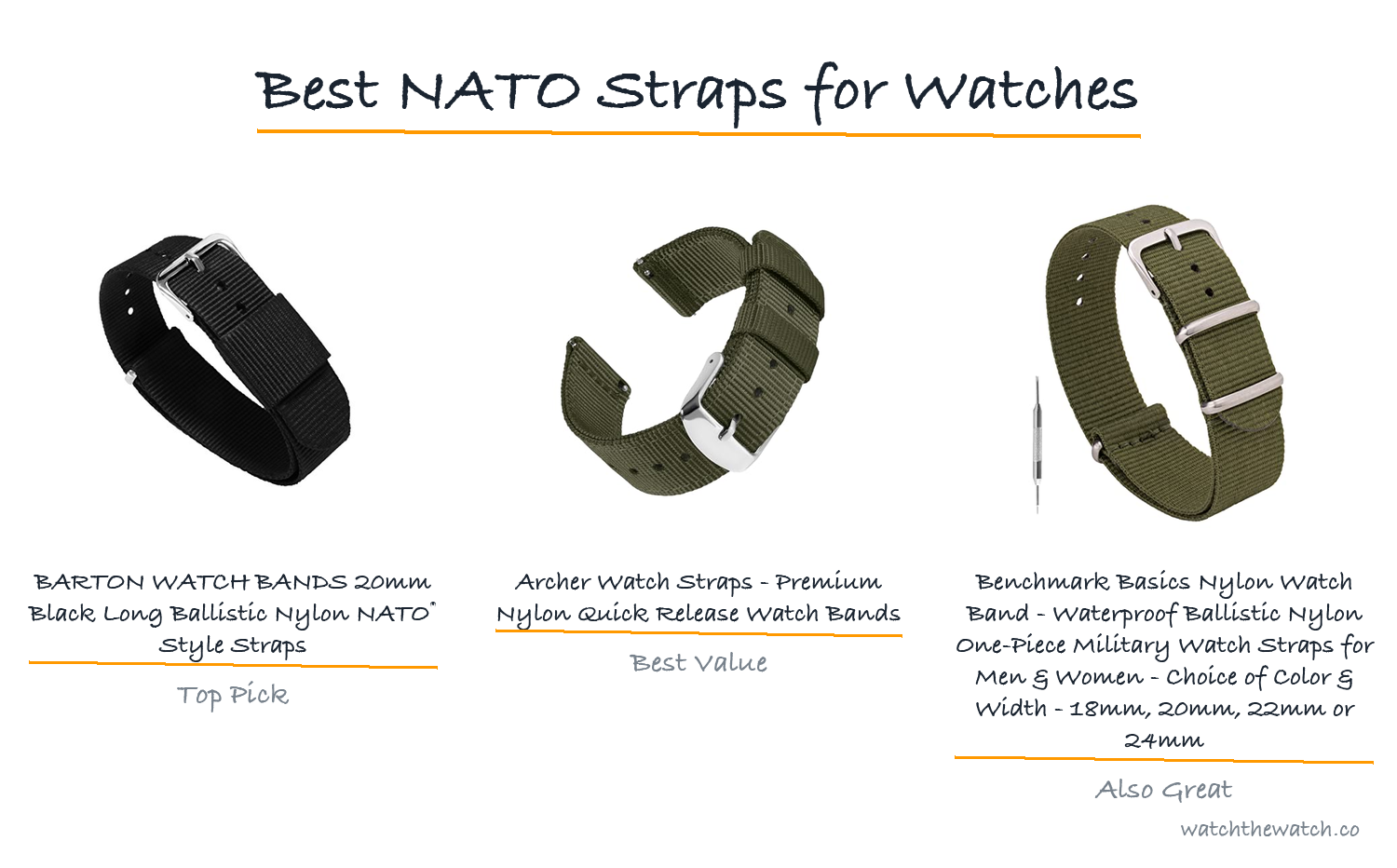
The best NATO strap for most people is the BARTON Watch Bands Ballistic Nylon NATO. Authentic one-piece construction, a dense ballistic weave, and solid stainless-steel hardware, all at a price where owning five colors is a reasonable decision.
Here is the clever part. A NATO threads a single piece of nylon under the case between both spring bars, so if one bar fails mid-wear, the watch stays on your wrist.
That backup isn’t marketing fluff. The British Ministry of Defence wrote it into specification in 1973, and enthusiasts still care about it today.
All three picks below cost under $30 and fit virtually any standard-lug watch with an 18mm–24mm lug width.
Our top picks at a glance
The standouts from this guide — prices change, so tap through for the current price.
As an Amazon Associate, Watch The Watch earns from qualifying purchases at no extra cost to you. Some links go to other retailers. See our affiliate disclosure.
How We Picked
NATO straps look deceptively simple. The quality gap shows up fast: fraying edges after a few months, a corroding buckle after one beach trip, keepers that slip before lunch.
We weighed each option against the criteria below, leaning on owner reviews and the usual enthusiast consensus from WatchUSeek and r/Watches:
- Nylon construction: Ballistic nylon, a tightly woven high-tenacity weave first developed for military use, holds its shape, resists fraying, and dries faster than cheaper single-weave alternatives. A good NATO feels slightly stiff when new and softens with wear without going limp.
- Hardware quality: Brushed 316L stainless steel or PVD-coated buckles shrug off salt water, sweat, and daily soap without pitting or tarnishing. Pot-metal or nickel-plated hardware discolors within months and can trigger skin reactions if you have a nickel sensitivity.
- Width coverage: The best lines cover 18mm, 20mm, 22mm, and ideally 24mm, so one brand can serve your whole collection. Lug width has no wiggle room: even 1mm off and the strap won’t fit or will sit unevenly.
- Keeper integrity: A proper NATO has one fixed and one floating keeper. Keepers that slide freely or break at the stitching undermine the whole security premise of the design.
- Length options: Standard NATO length suits wrists up to about 7.5 inches. Larger wrists need a “long” version, or the tail ends up embarrassingly short. I favored brands that offer long sizing or clearly state total strap length.
- Value: Good NATO straps are cheap by nature. I set a $35 ceiling; above that you are competing with entry-level leather and rubber that bring different trade-offs.
1. BARTON Watch Bands Ballistic Nylon NATO — Best Overall
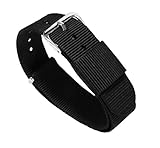
BARTON is the strap forums point you to first. It earns that: the ballistic-nylon build is noticeably denser than the competition at this price.
Owners report the hardware stays rust-free through regular swimming and heavy sweating. The “Long” sizing here adds real length over standard NATOs, so it’s the right call for wrists over about 7 inches.
It comes in plenty of solid colors and regimental stripes, and it looks at home on a field watch. Vintage reissues and budget divers like an affordable Seiko suit it just as well.
2. Archer Watch Straps Premium Nylon Quick Release — Best for Easy Swapping

Archer’s trick is quick-release spring bars built into the strap. Pull a tiny lever and you swap bands in seconds, no tools needed, which adds up fast if you rotate several straps.
The olive colorway is a classic field-watch pairing, and the same strap comes in a broad color range. Here’s the catch.
This is a two-piece design, not a true single-pass NATO. If a spring bar fails it won’t catch the watch the way a one-piece does, so you’re trading backup security for convenience. Worth knowing before you buy.
3. Benchmark Basics Ballistic Nylon Military Watch Band — Best Multi-Width Value

Benchmark Basics covers every common lug width, 18mm, 20mm, 22mm, and 24mm, at a price that makes stocking up on colors practical.
The waterproof claim holds up in owner reviews. The ballistic nylon doesn’t soak up sweat like cheaper weaves, and the hardware resists tarnishing through regular beach and pool use.
It’s a no-frills one-piece NATO in the traditional mold. The real thing without the brand premium.
Comparison: Top NATO Straps Side by Side
| Strap | Design | Widths Available | Key Feature | Best For | Approx. Price |
|---|---|---|---|---|---|
| BARTON Ballistic Nylon NATO | One-piece (true NATO) | 20mm (long sizing) | Dense weave, rust-resistant hardware, huge color range | First NATO, daily driver | ~$15–25 |
| Archer Premium Nylon QR | Two-piece + quick release | 20mm (multiple lines) | Tool-free swap in seconds | Multi-watch collectors, fast rotation | ~$20–30 |
| Benchmark Basics Military Nylon | One-piece (true NATO) | 18 / 20 / 22 / 24mm | Widest width range, waterproof construction | Budget buyers, larger-lugged watches | ~$10–20 |
What to Look for in a NATO Strap
True NATO vs. NATO-Style Bands
A genuine NATO, also called a G10 strap after the original MoD stock number, is one continuous piece of nylon that threads under the case and loops around both spring bars. If one bar pops, the second catches the watch.
Plenty of straps sold as “NATO-style” or “NATO-inspired” are actually two separate pieces, one on top and one passing under the case back. They look identical on the wrist but offer no redundancy.
If that backup is part of why you want a NATO, read the listing closely. Look for explicit words like “one-piece” or “single-pass”.
Measuring Your Lug Width Correctly
Lug width is the gap between the lugs where the strap meets the case, not the distance across the lugs.
Easiest method: pull your current strap and measure the band at the top end with calipers or a ruler. No guessing required.
Common sizes: 18mm (smaller dress and vintage watches), 20mm (most sport and everyday watches), 22mm (larger sport watches and modern divers), and 24mm (oversized tool watches and G-Shock-adjacent pieces).
If your watch has tapered lugs, measure at the widest point near the case.
Choosing a Hardware Finish
Brushed stainless steel is the most versatile finish. It matches sport watches, field watches, and most steel cases without looking overdressed.
Polished hardware suits dress pieces. PVD black or DLC is the go-to for blacked-out tool watches and military-themed builds.
Steer clear of nickel-plated or zinc-alloy (“pot-metal”) hardware. It corrodes fast in salt water or heavy sweat, and the nickel can cause contact dermatitis on sensitive skin. All three picks above use stainless or coated hardware.
Getting Strap Length Right
Standard NATOs split into a short section around 75mm and a long section around 115mm. That fits wrists up to about 7.5 inches.
Bigger wrist? Hunt down a “long” NATO specifically. The Barton listing above is a long version, which is part of why it leads this list.
A too-short NATO leaves a stubby tail that won’t reach the second keeper. A too-long one flaps around and catches on everything.
Some brands list total strap length in the specs. Add both sections and compare to your wrist circumference plus about 20–25mm for the watch thickness. For how snug it should actually sit, our watch fit guide walks through it.
Color and Pattern Strategy
Solid colors (black, olive, navy, grey, khaki) are the most flexible and pair with the widest range of case finishes and dial colors.
Regimental stripes (those alternating narrow and wide bands that nod to British military heritage) look sharp on field watches, vintage reissues, and anything with an Explorer or Submariner aesthetic.
All three brands above sell both solids and stripes. My practical starter kit: one black, one olive, and one stripe that picks up an accent on your dial.
Frequently Asked Questions
What is a NATO strap and why do watch enthusiasts like them?
A NATO strap is a one-piece nylon band that threads under the case and secures it between both spring bars. If one bar fails, the watch stays on your wrist.
That safety angle is why the British Ministry of Defence standardized the design in 1973 (NATO stock number G10). Enthusiasts also like the durability, the breathability in warm weather, and how easy they are to swap.
And they’re cheap. A NATO can refresh a watch for under $25, which makes it one of the best-value mods in the hobby.
Are NATO straps waterproof?
Mostly, yes. Ballistic nylon shrugs off swimming, sweat, and rain, and the nylon itself won’t degrade from moisture.
The trade-off: it soaks up some water and takes longer to dry than rubber or silicone. For everyday swimming, the beach, and general sport, a quality ballistic nylon NATO like Barton or Benchmark Basics is a solid choice.
For scuba or serious water sports where drying time matters, a rubber or FKM strap wins. If you want something built for the water, see what makes a proper dive watch.
The hardware is the real variable. Go stainless or PVD-coated on the buckle and keepers, and you’ll never see rust.
Will a NATO strap fit my watch?
Almost certainly. NATO straps fit any watch with standard spring bars and a lug width between 16mm and 24mm, which covers the vast majority of watches.
The exceptions are watches with very flush lugs, integrated bracelets, or proprietary fittings, think certain Swatch models, Apple Watch, and some luxury integrated-bracelet pieces.
Because it threads under the case back, a NATO adds roughly 2mm of wrist-side height versus a two-piece strap. That shows on very slim dress watches.
It’s most at home on tool watches, field watches, dive watches, and vintage reissues.
How do you put on a NATO strap?
Pop your current strap off with a spring-bar tool, but leave both spring bars in the lugs.
Slide the long section under the case, between the movement and the case back, so the buckle end sits on the wrist side. Feed the long tail through the floating keeper, fold it back through the buckle, then thread it through the fixed keeper to lock the tail down.
The short section lies on top of the case back on the non-buckle side. The whole thing takes about two minutes once you’ve done it once. If the threading trips you up, a quick video tutorial fixes it.
How long does a NATO strap last?
A quality ballistic nylon NATO usually lasts two to four years of daily wear before the nylon frays noticeably or the hardware wears out. Cheap single-weave straps can fall apart in under a year.
At $10–25 a strap, most people just replace them yearly or rotate several to spread the wear. The buckle and keepers normally outlast the nylon on well-made straps.
Some owners reuse the hardware and swap only the nylon. Honestly, at these prices it rarely makes sense to bother.

Daniel Hart is the editor of Watch The Watch. He researches and writes the site’s buying guides, brand comparisons, and explainers, focused on accessible, enthusiast-level watches — affordable automatics, divers, field and dress watches, everyday quartz, and the straps, winders and tools that go with them. The goal is practical, budget-aware advice that helps readers choose the right watch for their wrist and their budget. Recommendations draw on manufacturer specifications and the wider enthusiast community.