Daniel Hart · ·
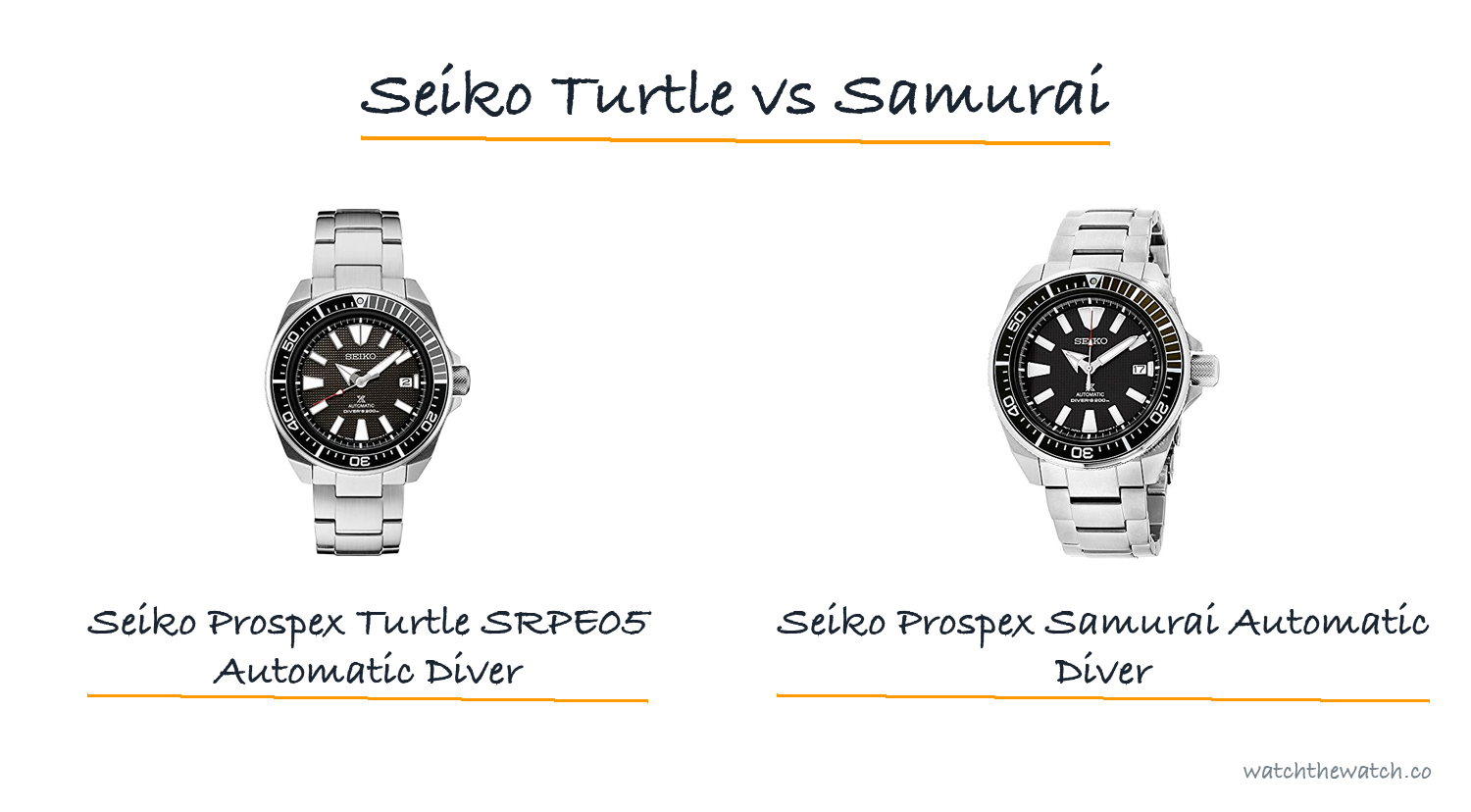
The Seiko Samurai is the stronger pick if you want a sharper, modern tool-watch silhouette that wears smaller than its diameter suggests. The Turtle SRPE05 wins if the cushion case and that original 1970s dive-watch DNA pull at you, and if you want hand-winding and hacking in the movement.
Both deliver 200m water resistance and the kind of reliability that has people asking whether Seiko counts as luxury, all for well under $300. The decision comes down almost entirely to case shape and wrist fit.

Spec Comparison at a Glance
| Specification | Turtle SRPE05 | Samurai |
|---|---|---|
| Case diameter | 44.3mm | 43.8mm |
| Case thickness | 13.6mm | ~13mm |
| Lug-to-lug | ~53mm | ~49mm |
| Lug width | 22mm | 22mm |
| Crystal | Hardlex | Hardlex |
| Movement | Seiko 4R36 | Seiko 4R35 |
| Power reserve | 41 hours | 41 hours |
| Hand-wind / hack | Yes / Yes | No / No |
| Water resistance | 200m (20 bar) | 200m (20 bar) |
| Case shape | Cushion / rounded | Angular / sharp |
| Typical price | Around $240–$300 | Around $220–$280 |
Case Design and Wearability
Case shape is where these two divers split completely, and it matters more on the wrist than the shared 44mm-class diameter implies. The Turtle’s cushion case is a direct callback to the Seiko 6309-7040 from 1976: rounded shoulders, softer lines, and a crown at 4 o’clock instead of the usual 3.
That off-centre crown is the underrated part. It never digs into your hand during long wear, and veteran Turtle owners bring this up again and again.
The downside is bulk. At 44.3mm with a lug-to-lug around 53mm, this is a genuinely large watch. Owners with wrists under about 7 inches (17.5cm) regularly report visible overhang.
On a 7.5-inch wrist it looks commanding and deliberate. On anything smaller, it can feel like it is wearing you.
The Samurai’s angular, almost architectural case tells a different story. Its sharper lugs and more compact lug-to-lug of around 49mm mean it sits closer to the wrist and reads more contained.
Forum consensus keeps landing on the same point, and it’s why the Samurai edges the Turtle for daily wear. That 4mm difference in lug-to-lug has an outsized effect on how settled the watch feels on smaller wrists.
If your wrist is under 7 inches, the Samurai is the more comfortable choice, no real debate.
Movement: 4R36 vs 4R35
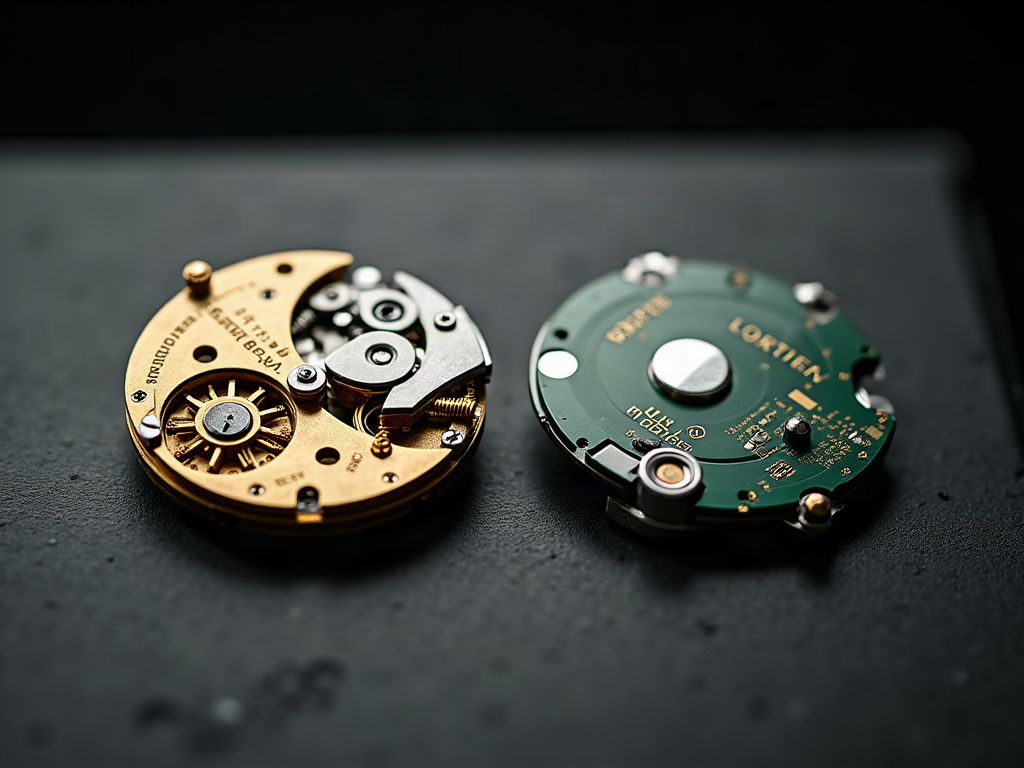
This is a distinction the marketing tends to underplay, but enthusiasts care. The Turtle SRPE05 runs the Seiko 4R36, which gives you both manual winding and a hacking seconds hand. Pull the crown out to set the time and the seconds hand stops dead.
The Samurai uses the 4R35, which has neither feature. You can’t hand-wind it, and the seconds hand keeps ticking while you set the time.
For a dedicated daily wearer, the practical gap is small. The rotor keeps both watches wound through normal wrist movement, and setting the time a few seconds off is rarely a problem.
The 4R36 earns its keep with intermittent wear. If the Turtle sits on a shelf past a day and the mainspring runs down, you can wind it fully by hand before strapping it on. The Samurai in the same spot needs a vigorous shake or some wrist time before it hits full reserve.
Both movements carry the same rated accuracy of +45/-35 seconds per day. That’s not precision-regulated, but owners report real-world performance that often beats the rated spec. Power reserve is identical at 41 hours.
If movement capability matters to you at all, the 4R36 in the Turtle is the more versatile caliber. Treated properly, either one is the sort of automatic that runs for decades.
Dial Legibility and Lume
Both watches use Seiko’s LumiBrite on the hands and indices, and both glow strongly in low light. This is a real dive watch strength: the lume charge is bright and long-lasting by any budget-diver standard.
On lume, the two are essentially a tie.
Daytime character is where they split. The Samurai’s dial reads cleaner and more minimalist, with sword-style hands and applied indices that give it a lean, direct look. Reviewers tend to call it more versatile outside dive contexts, crossing into business-casual better than an old-school diver does.
The Turtle’s dial is rounder and chunkier, and it carries more retro personality. Fans call it “warm” and “characterful.” People who find it busy go for the Samurai’s restraint instead.
Both run a unidirectional rotating bezel with 120 clicks and an aluminum insert in most configurations. The common gripe is that aluminum scratches more easily than the ceramic inserts on pricier Prospex models like the Seiko SPB147.
At this price, though, aluminum is exactly what you should expect.
Value and Context
Street prices bounce around, but both models typically land in the $220–$300 range. Neither makes you compromise on core dive capability to get there: screw-down crowns, 200m water resistance, solid stainless steel cases, and Seiko’s proven automatics.
Want the bigger picture on how Seiko stacks up against Swiss rivals at this money? Our Tissot vs Seiko comparison puts the positioning in perspective.
Drawn to the Samurai look and wondering about stepping up? The Seiko King Samurai SRPH43 raises the stakes: sapphire crystal instead of Hardlex, the more accurate 6R35 movement, and a larger 45mm case, at a higher but still reasonable price.
For most buyers, though, the standard Samurai or Turtle is the sweet spot of value.
Choose the Turtle If…
- The cushion-case silhouette inspired by 1970s Seiko heritage is what drew you in, and the design has genuine character that photographs and wears unlike anything else at this price
- You want manual winding and hacking on your movement (4R36), which matters for intermittent wearers or anyone who likes precise time-setting
- Your wrist is 7 inches or above and the 44.3mm case will sit well rather than overhang
- The 4 o’clock crown position appeals to you for comfort during extended wear
- You plan to run it on rubber or NATO straps, where the cushion case shape particularly excels
Choose the Samurai If…
- You want a more angular, modern aesthetic that works as a daily driver across casual and smart-casual contexts, not just dive scenarios
- Your wrist is under 7 inches, where the shorter lug-to-lug (around 49mm vs 53mm) makes a real difference in comfort and proportion
- A clean, uncluttered dial appeals to you more than retro character
- This is your first automatic diver and you want maximum versatility from one watch
- You find the Samurai priced slightly lower at your preferred retailer and want to maximize the dollar-to-spec ratio
Verdict
There’s no bad outcome here. Both the Turtle SRPE05 and the Samurai are among the most capable divers under $300, and both will outlast any trend cycle.
The Turtle has the better design story, the more capable movement (4R36 over 4R35), and a look that collectors keep coming back to.
The Samurai is the more practical daily companion. It wears smaller, its dial suits more occasions, and enthusiast consensus rates it as the easier watch to live with if you’re only buying one.
If the cushion case made you stop scrolling, buy the Turtle. That instinct is worth following.
Still undecided and want the watch that asks for the least compromise across the most situations? The Samurai earns the recommendation.
Frequently Asked Questions
What is the main difference between the Seiko Turtle and the Seiko Samurai?
The two big differences are case shape and movement. The Turtle uses a rounded cushion case derived from the 1970s Seiko 6309 and runs the 4R36 with manual winding and hacking.
The Samurai has a sharper, more angular case and uses the 4R35, which lacks both of those features. Both offer 200m water resistance, Hardlex crystal, and a 41-hour power reserve.
Which is better for smaller wrists — the Turtle or the Samurai?
The Samurai. Both watches sit close to 44mm in diameter, but the Samurai’s lug-to-lug of roughly 49mm is much shorter than the Turtle’s approximately 53mm.
On wrists under 7 inches (about 17.5cm), the Samurai sits more naturally and overhangs less. The Turtle is best suited to 7 inches and above.
Do the Turtle SRPE05 and Samurai use the same movement?
No. The Turtle SRPE05 uses the Seiko 4R36, which supports both manual winding and hacking (the seconds hand stops when setting).
The Samurai uses the 4R35, which has neither. Both share the same 41-hour power reserve and rated accuracy of +45/-35 seconds per day.
Are these watches suitable for actual scuba diving?
Yes. Both carry 200m (20 bar) water resistance, screw-down crowns, and unidirectional rotating bezels, which covers recreational diving comfortably.
They aren’t ISO 6425-certified dive watches, but their specs clear the standard’s 100m minimum water resistance requirement by a wide margin.
Which offers better value in 2026 — the Turtle or the Samurai?
Both are exceptional value, typically priced between $220 and $300. The Turtle holds a slight edge in movement capability (4R36 vs 4R35) at a similar or marginally higher price.
If the Samurai is clearly cheaper at your retailer, the movement gap is small enough that it’s still outstanding value. Neither watch makes you compromise on core dive-watch specs to hit its price.

Daniel Hart is the editor of Watch The Watch. He researches and writes the site’s buying guides, brand comparisons, and explainers, focused on accessible, enthusiast-level watches — affordable automatics, divers, field and dress watches, everyday quartz, and the straps, winders and tools that go with them. The goal is practical, budget-aware advice that helps readers choose the right watch for their wrist and their budget. Recommendations draw on manufacturer specifications and the wider enthusiast community.